Art Direction
Branding
Design
Editorial

The Rooted Journal — exploring regenerative farming through elevated thinking and stories rooted in food and the future — is published by Elevated Foods and supported by a grant from the USDA’s Partnerships for Climate-Smart Commodities. Forest partnered with publisher Austin Brown and Editor-in-chief and longtime collaborator Dustin Beatty to bring this idea to life, extending the impact of the grant into a bi-yearly publication and online media channel. It felt like a fortuitous culmination of all of our editorial experience in the past twenty years, bringing together a hopeful vision of an aspect of the world through our network of writers, photographers, artists, and most importantly, the farmers working and providing the food that we all depend on.

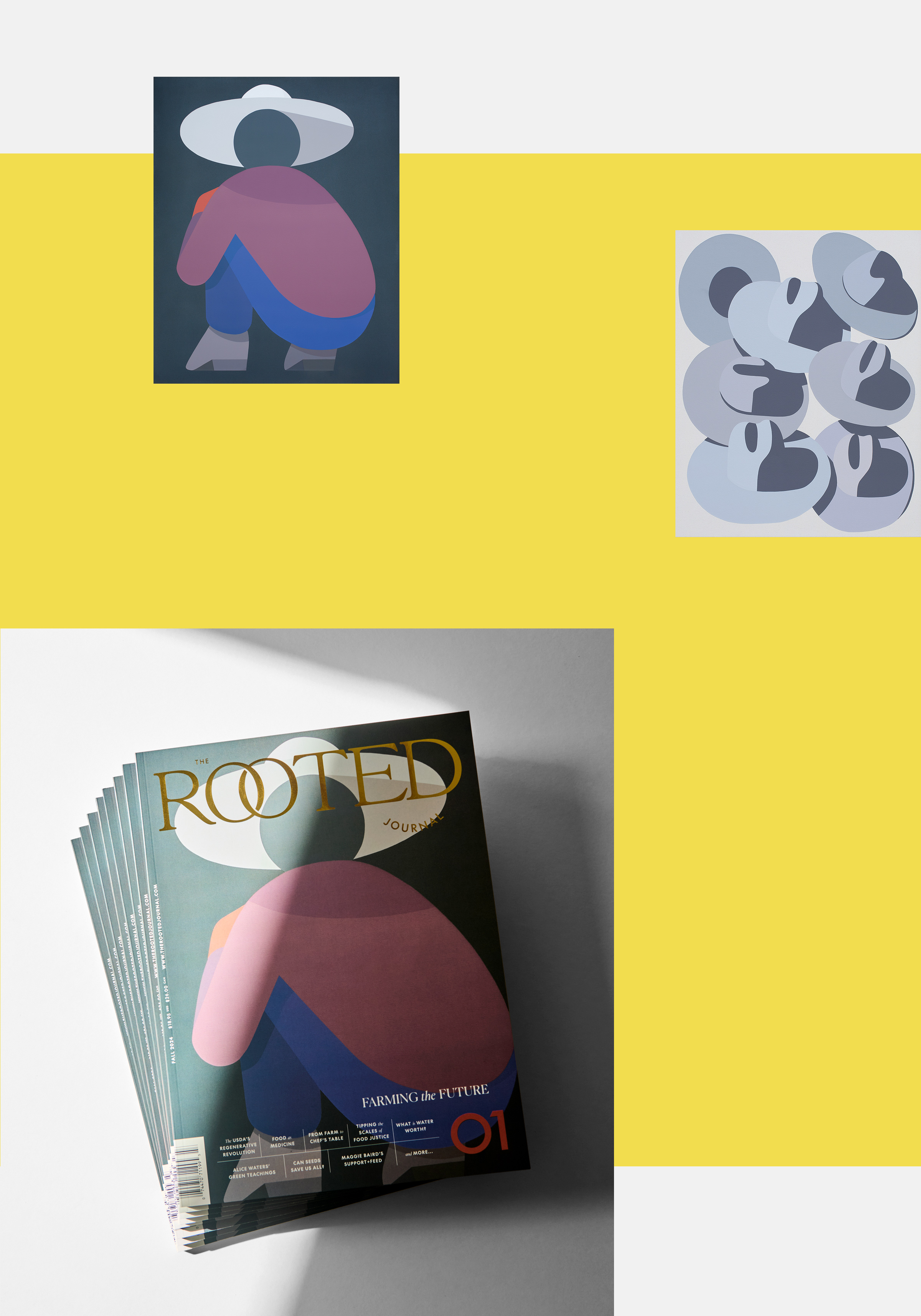
We began only with the work Andy Cruz of House Industries had established for the parent branding of Elevated Foods. Naming the publication came naturally, as only something with a “double-O” made sense. To further the connection between the two entities, we added a hint of the smile for those in tune with small details. We experimented with countless cover concepts, fine-tuning the personality and voice as we went, eventually landing on a sort of middle-ground between our previous work with Anthem and Howler.

Found imagery used for mock-up purposes only.

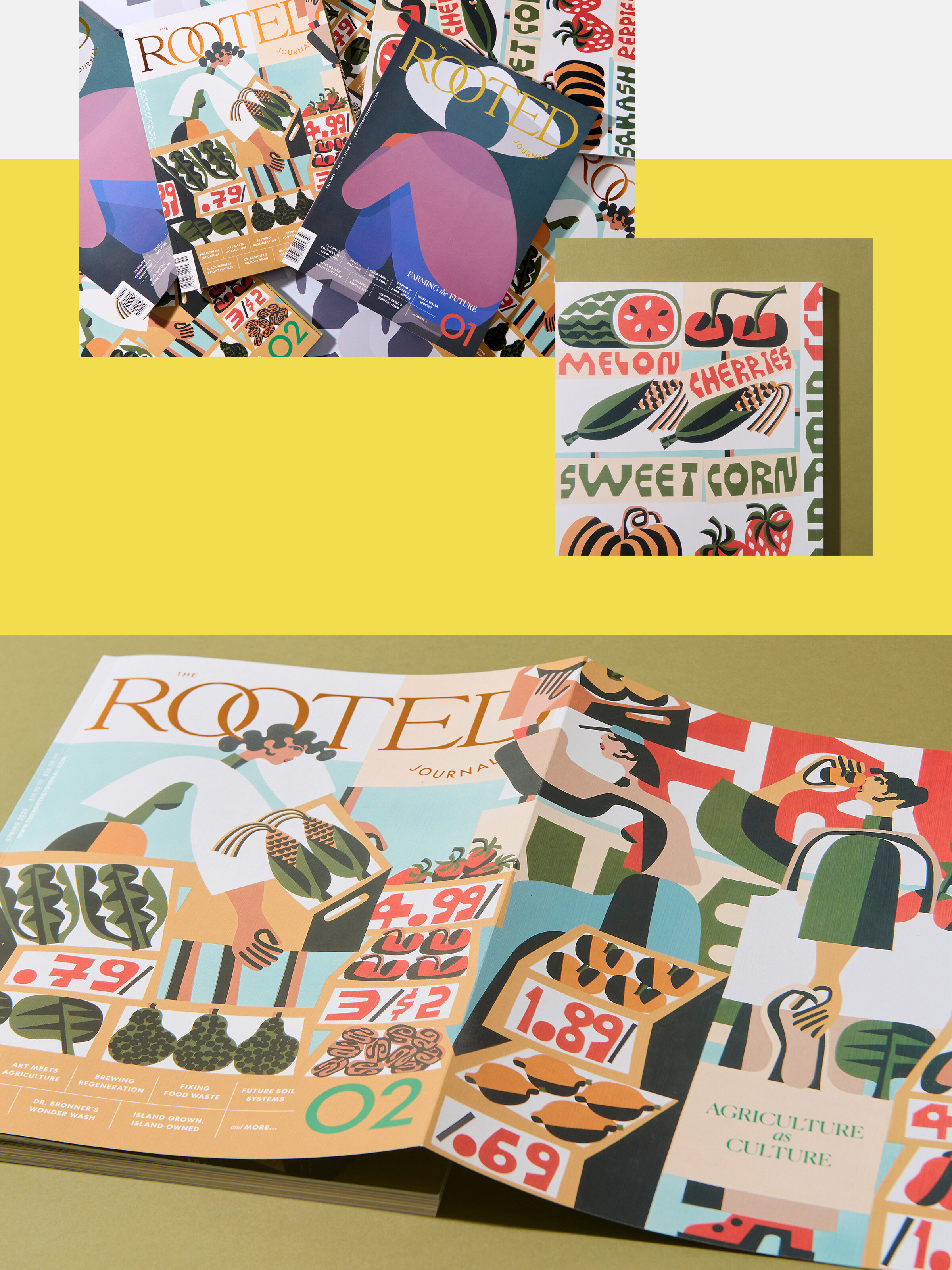
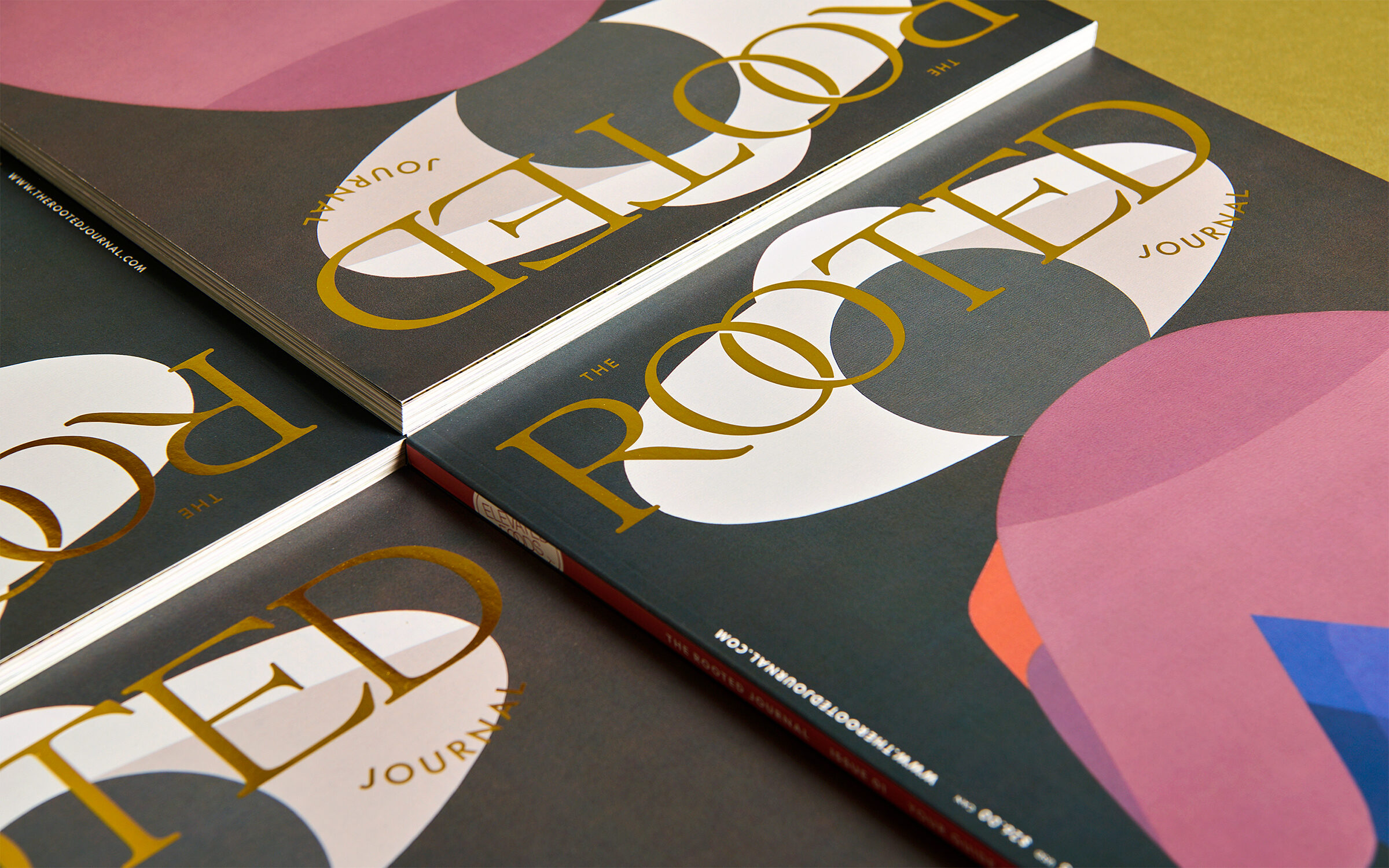
As we continued to concept the very first cover, we immediately thought of Geoff McFetridge, and played around with some existing work we found to present our ideas to him. We presented only one — an ambiguous image of a farmer crouching down, pushing against the frame of the magazine itself. Amazingly, Geoff replied with a story about his great-grandfather, a cowboy living in Canada, where “Chinese workers were not given a place to sit, so they learned to sit like that, resting flat-footed.” The painting graciously became a part of The Rooted Journal‘s introduction to the world, encapsulating all that we hoped to achieve with it. To celebrate, we added a bit of foil and spot varnish to both the front and the back, a feature which will continue through future issues.

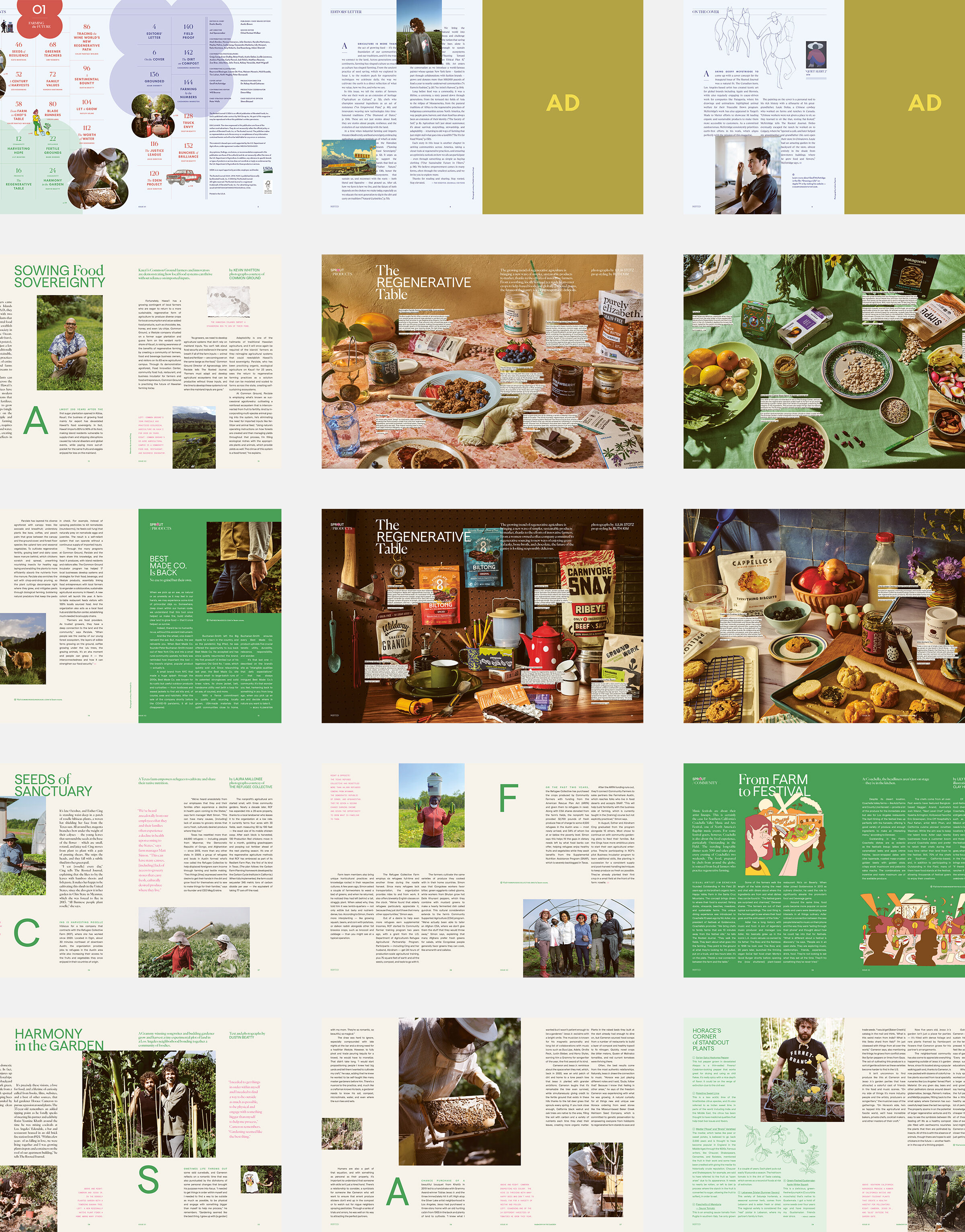
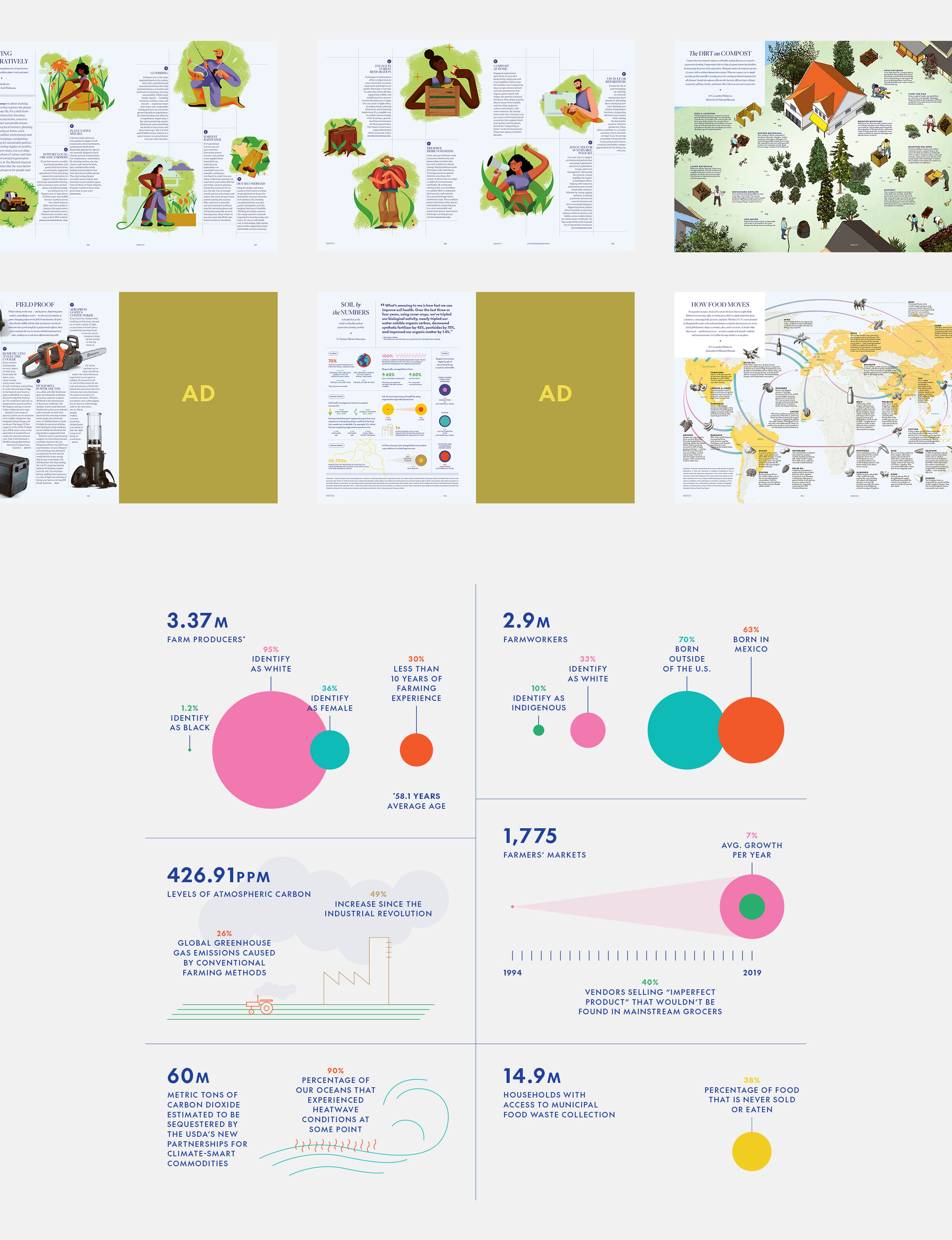
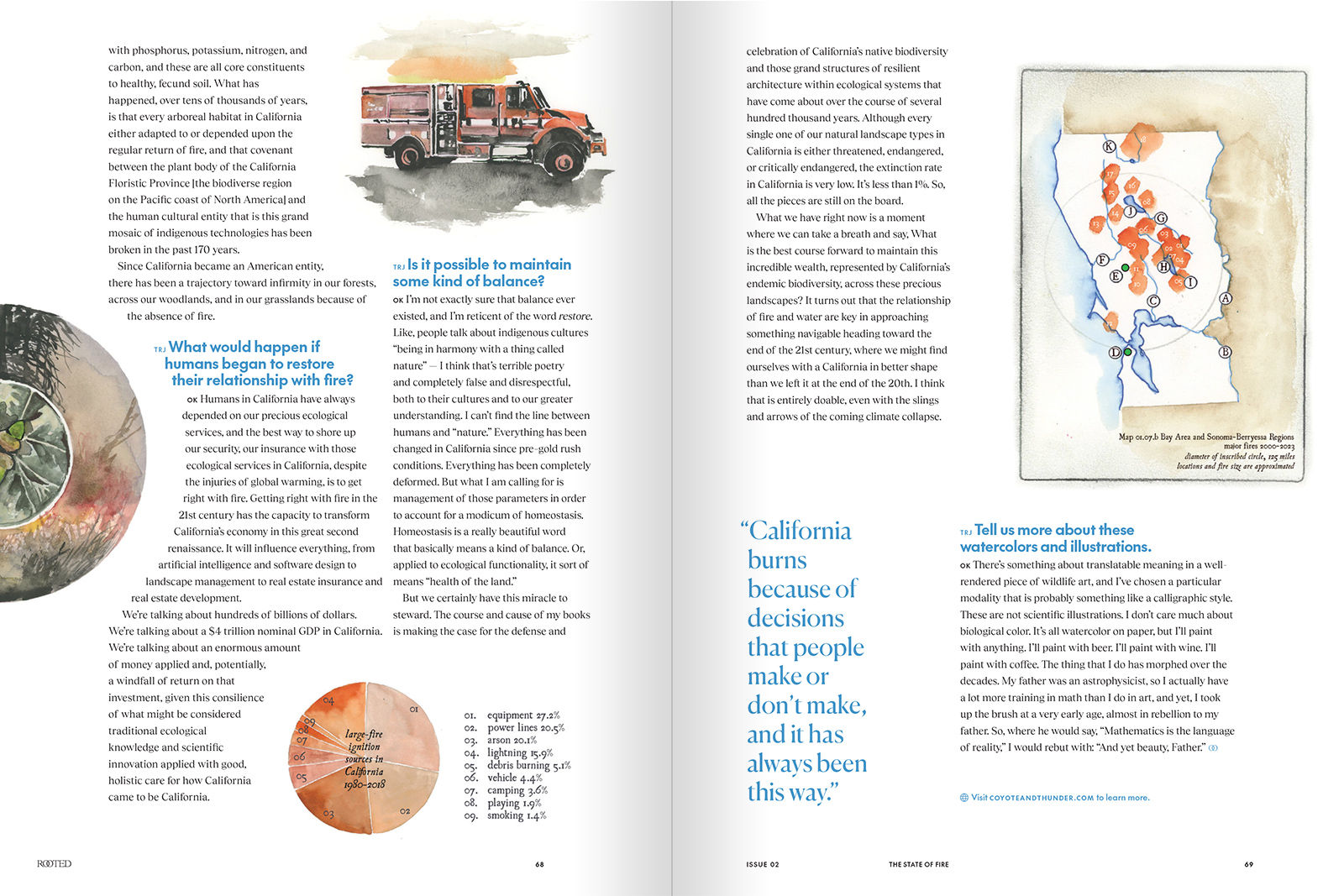
Next up was standardizing our front and back of book content, which included the shorter-form section we named Sprout — ideas, inspiration, and community stories from those with dirty boots on the ground who are dedicated to doing good — and setting up collaborations with our network of writers, artists, and photographers. Like Julia Stotz, who’s beautiful still life work with prop stylist Ruth Kim became a regular addition. Or Haisam Hussein, who illustrated all of the details about how to compost, and how food moves throughout the world before we eat it. The final page presented an opportunity for us to represent some eye-opening data in a graphic format.

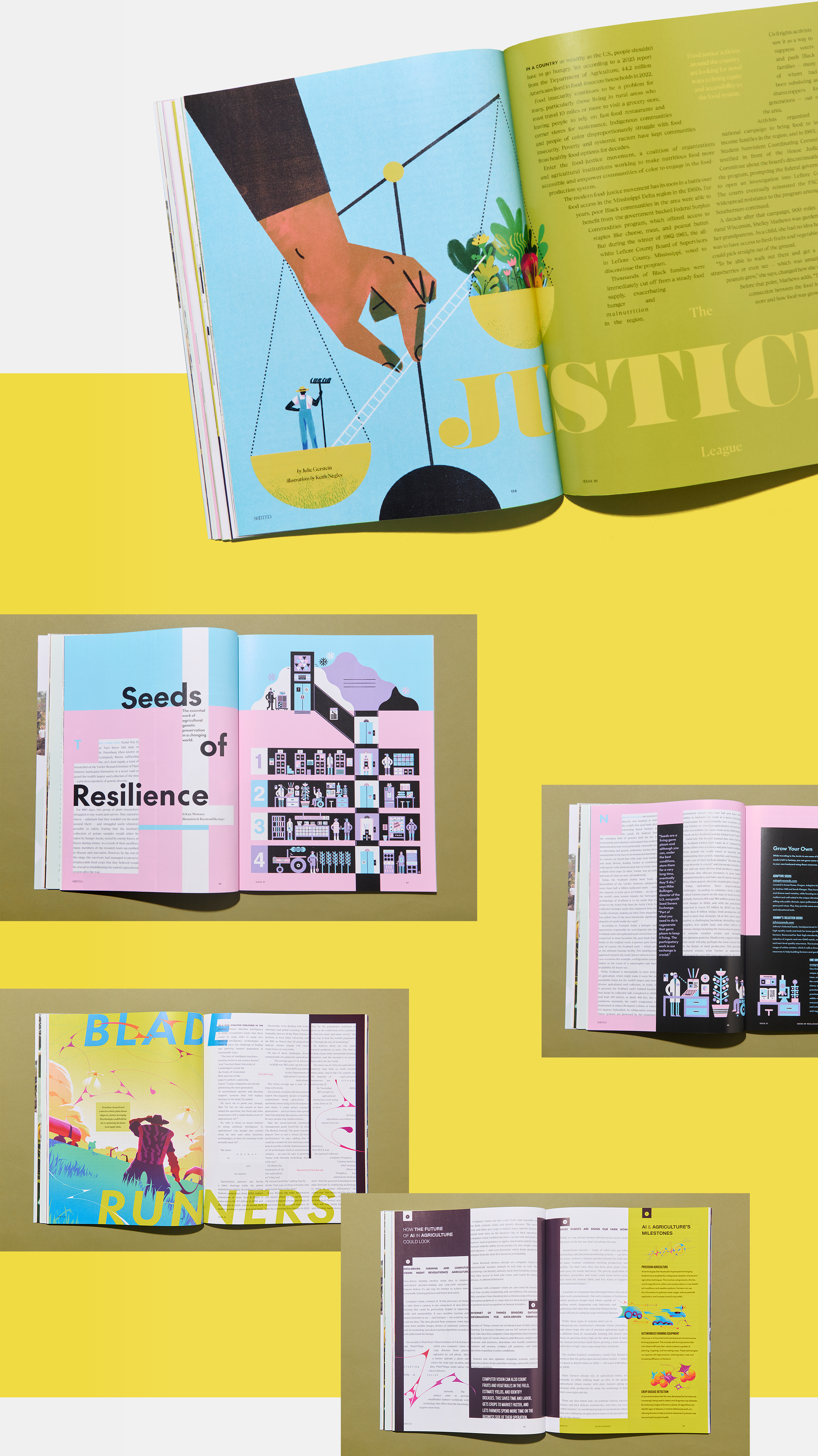
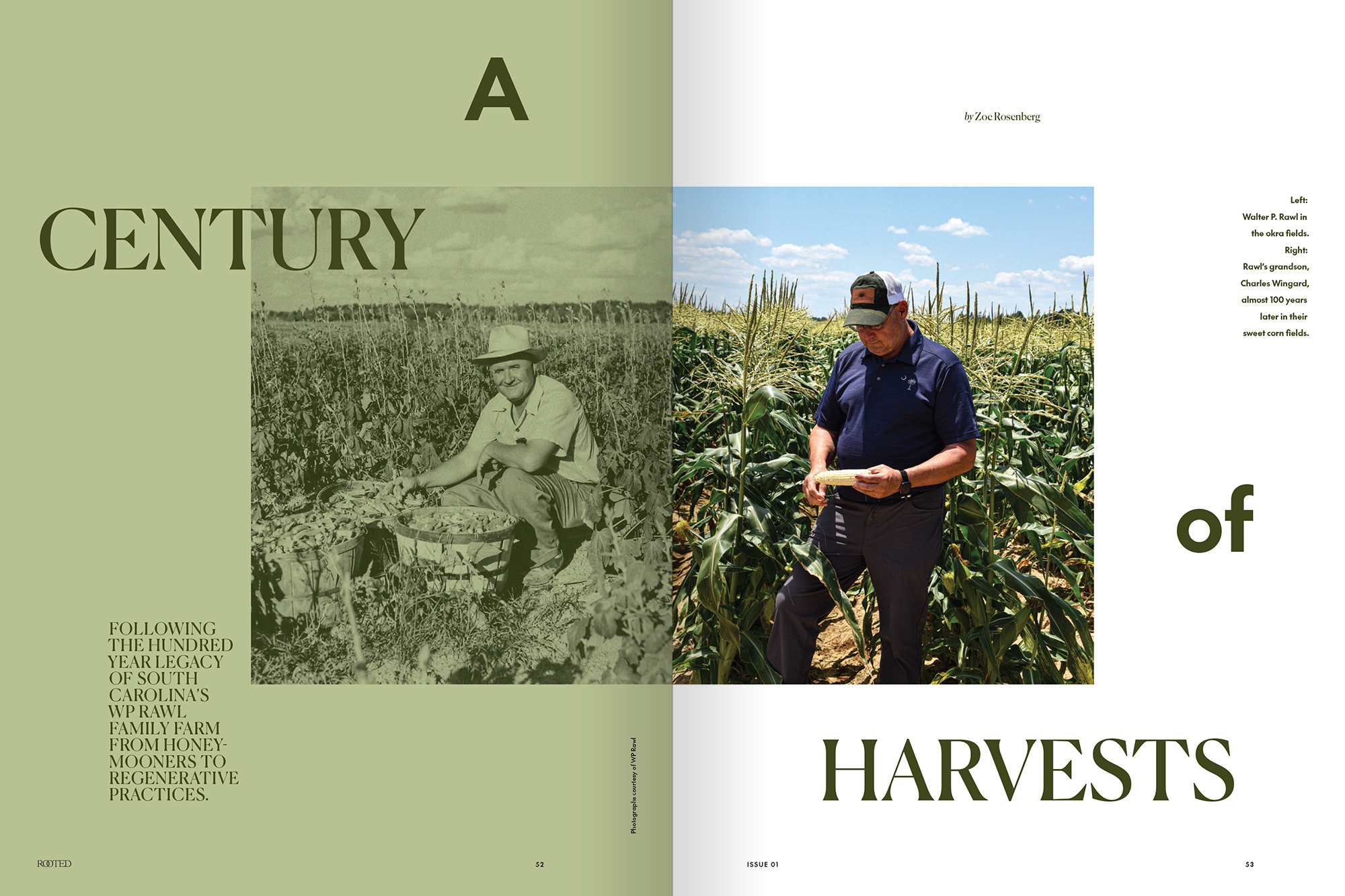
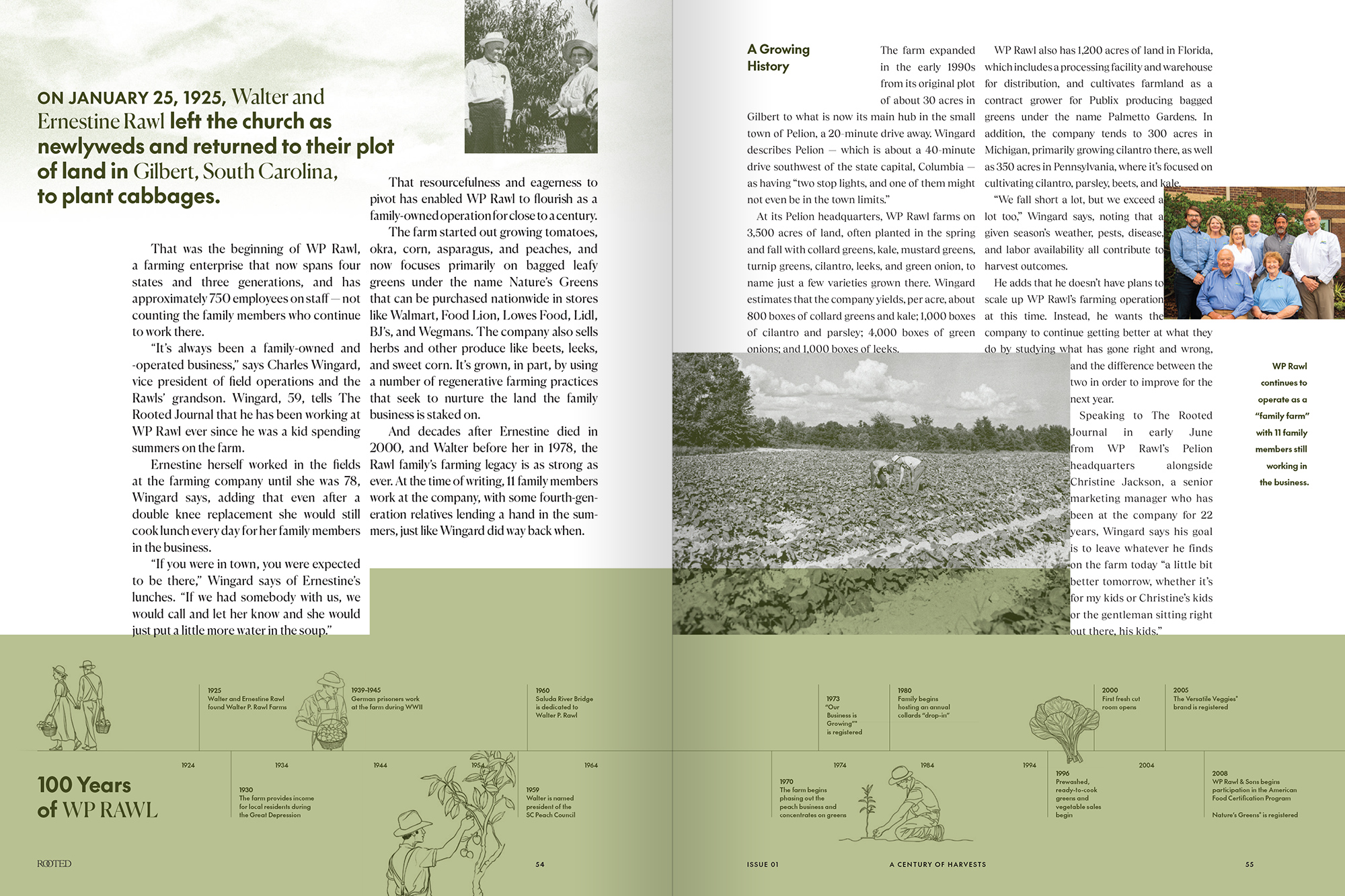
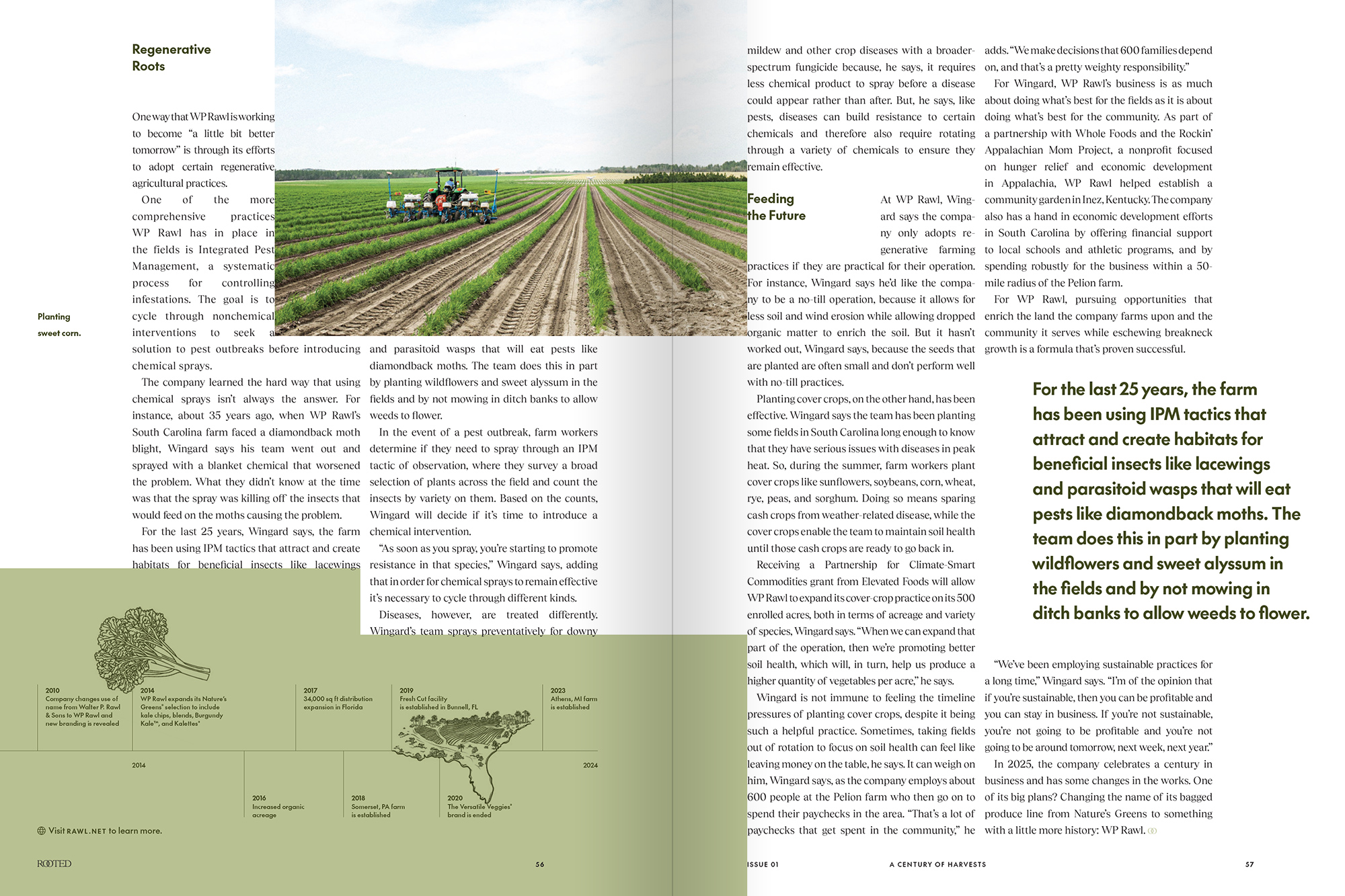
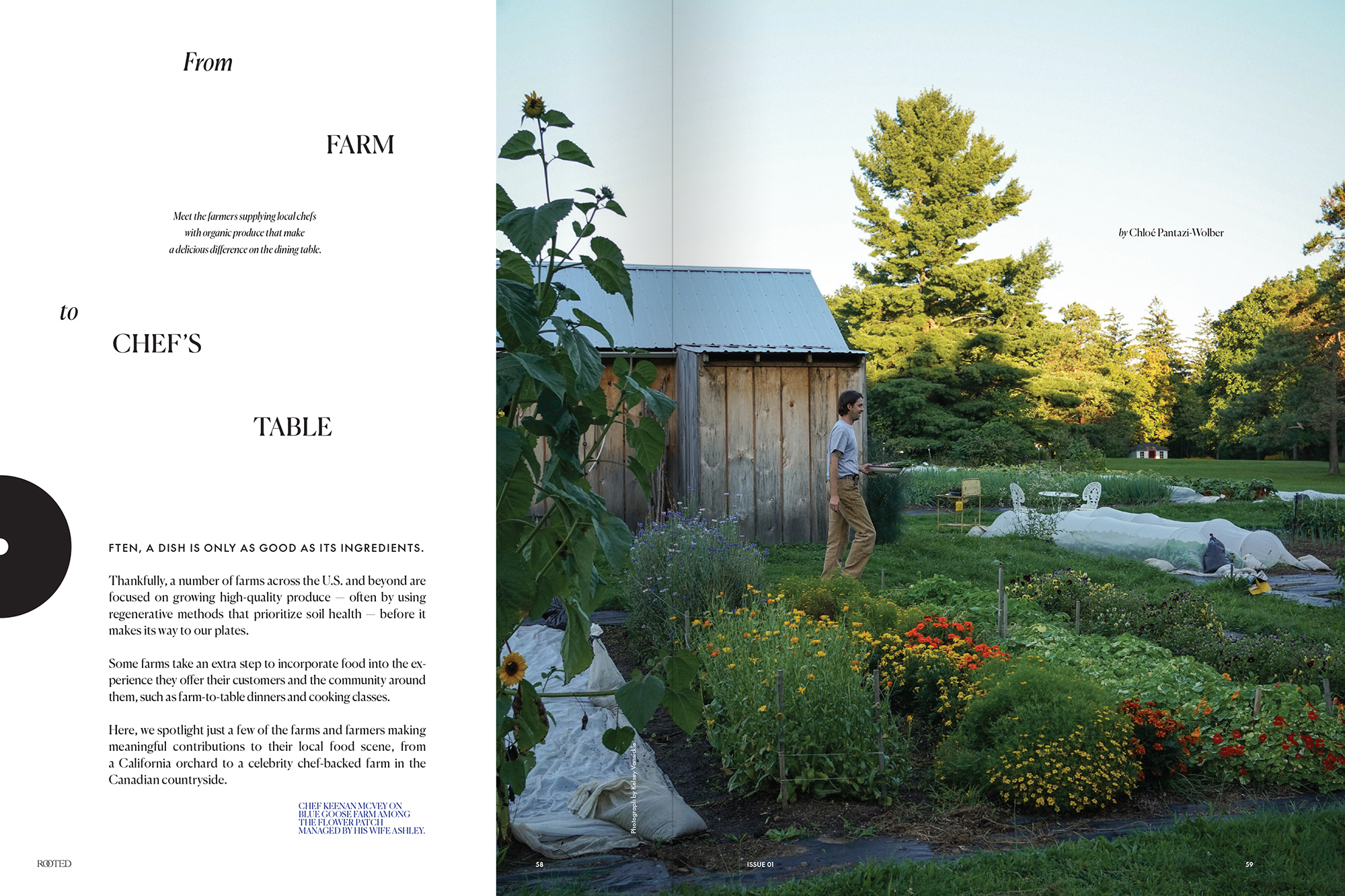
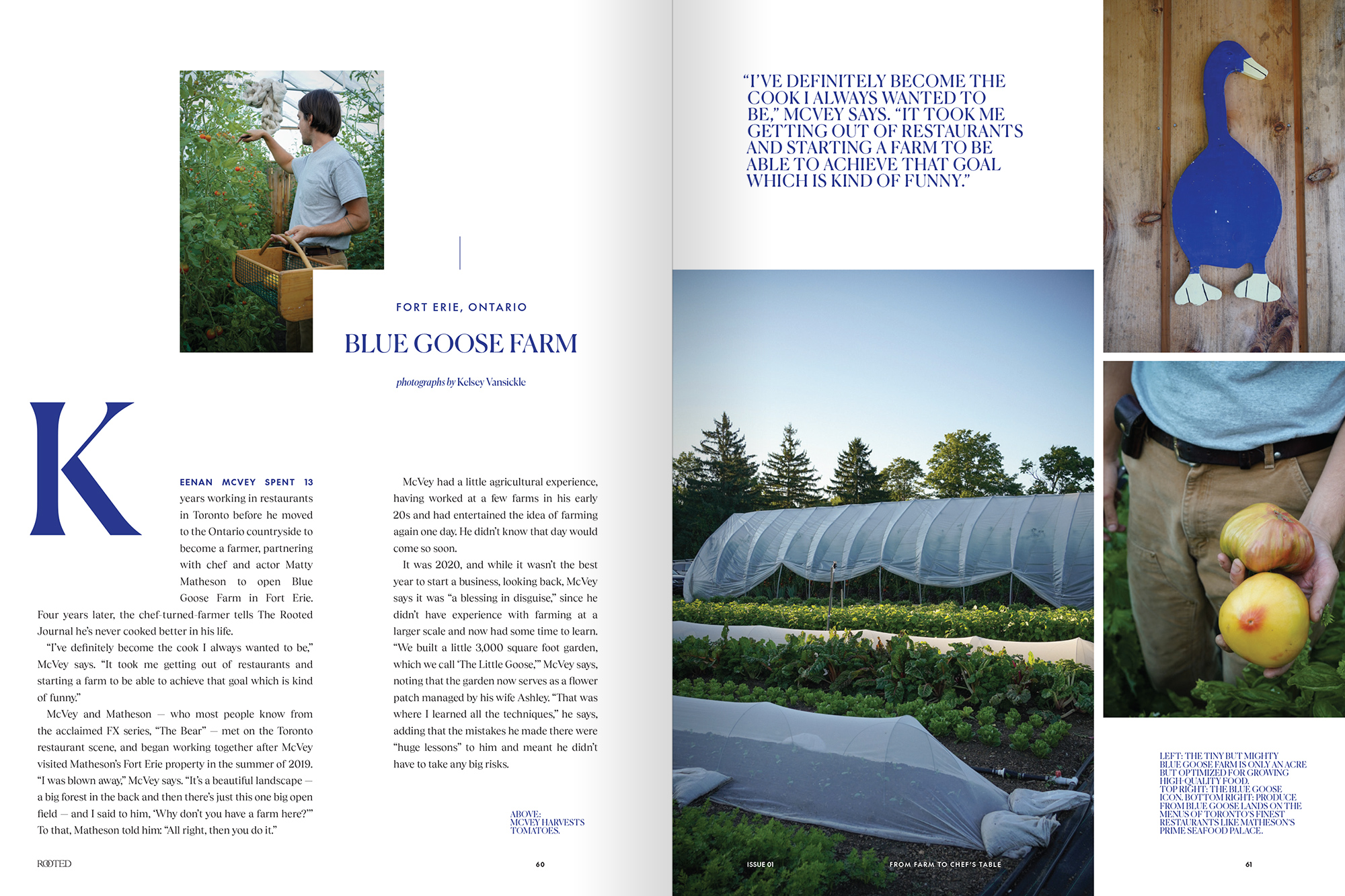
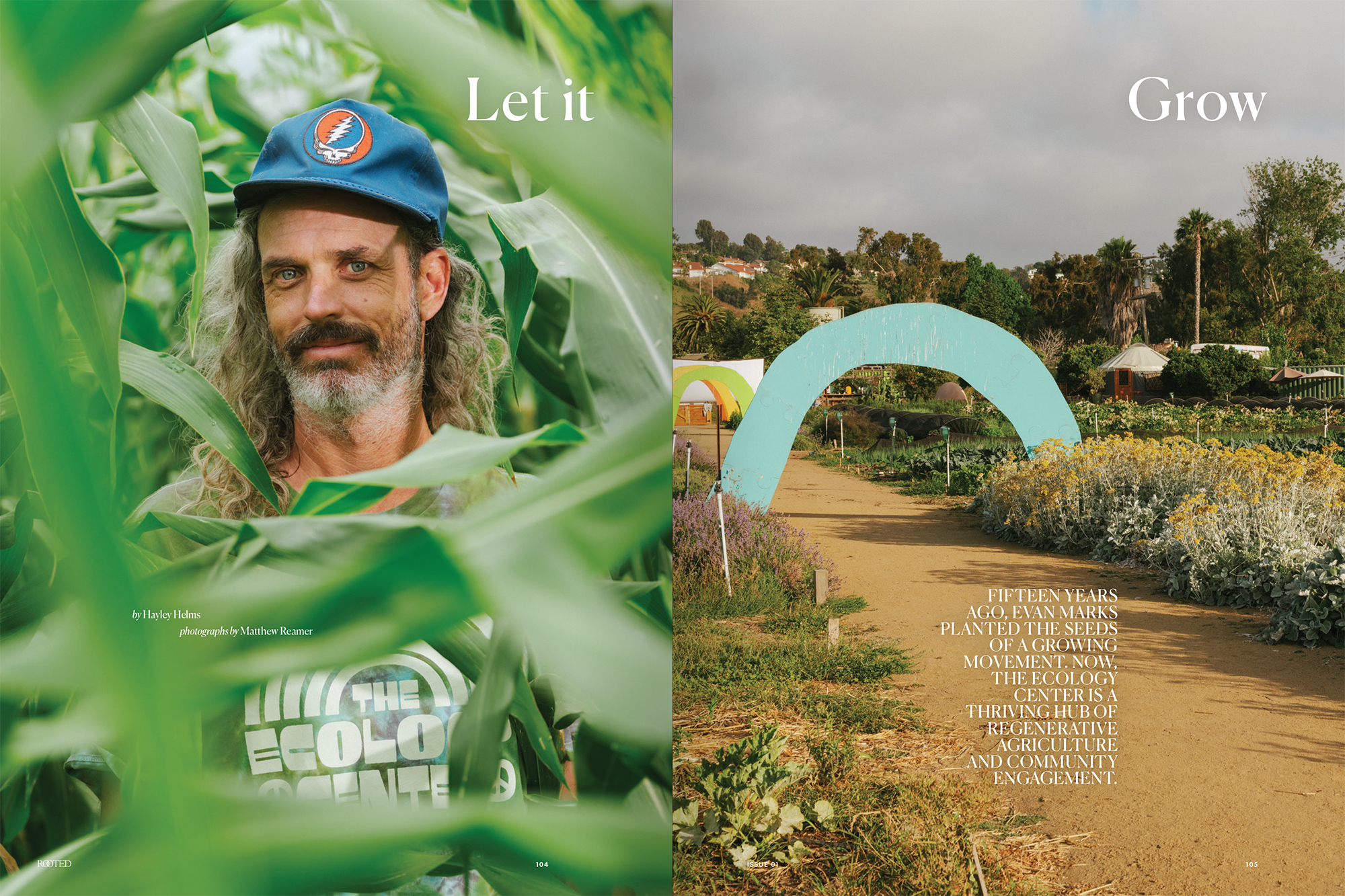
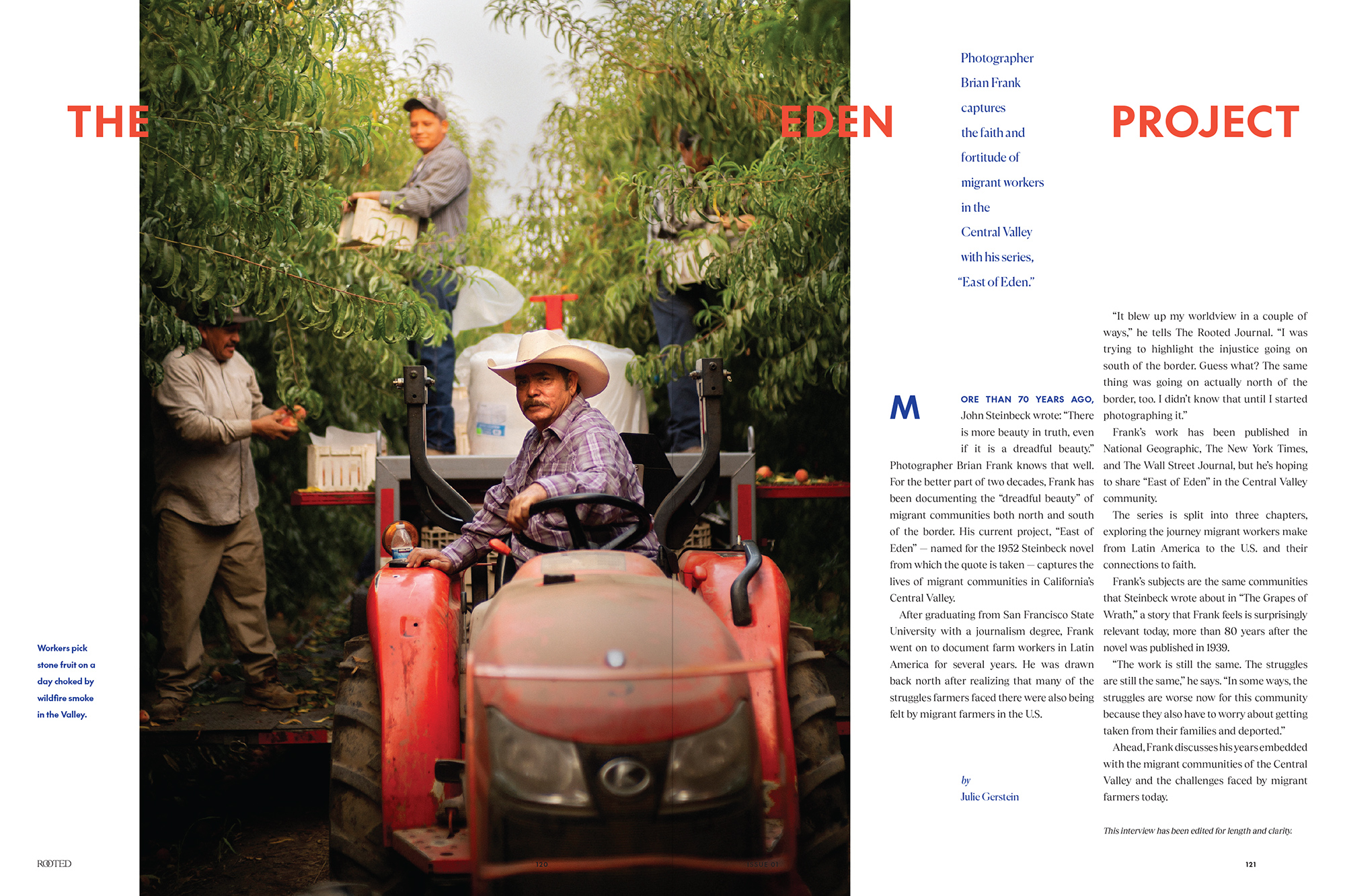
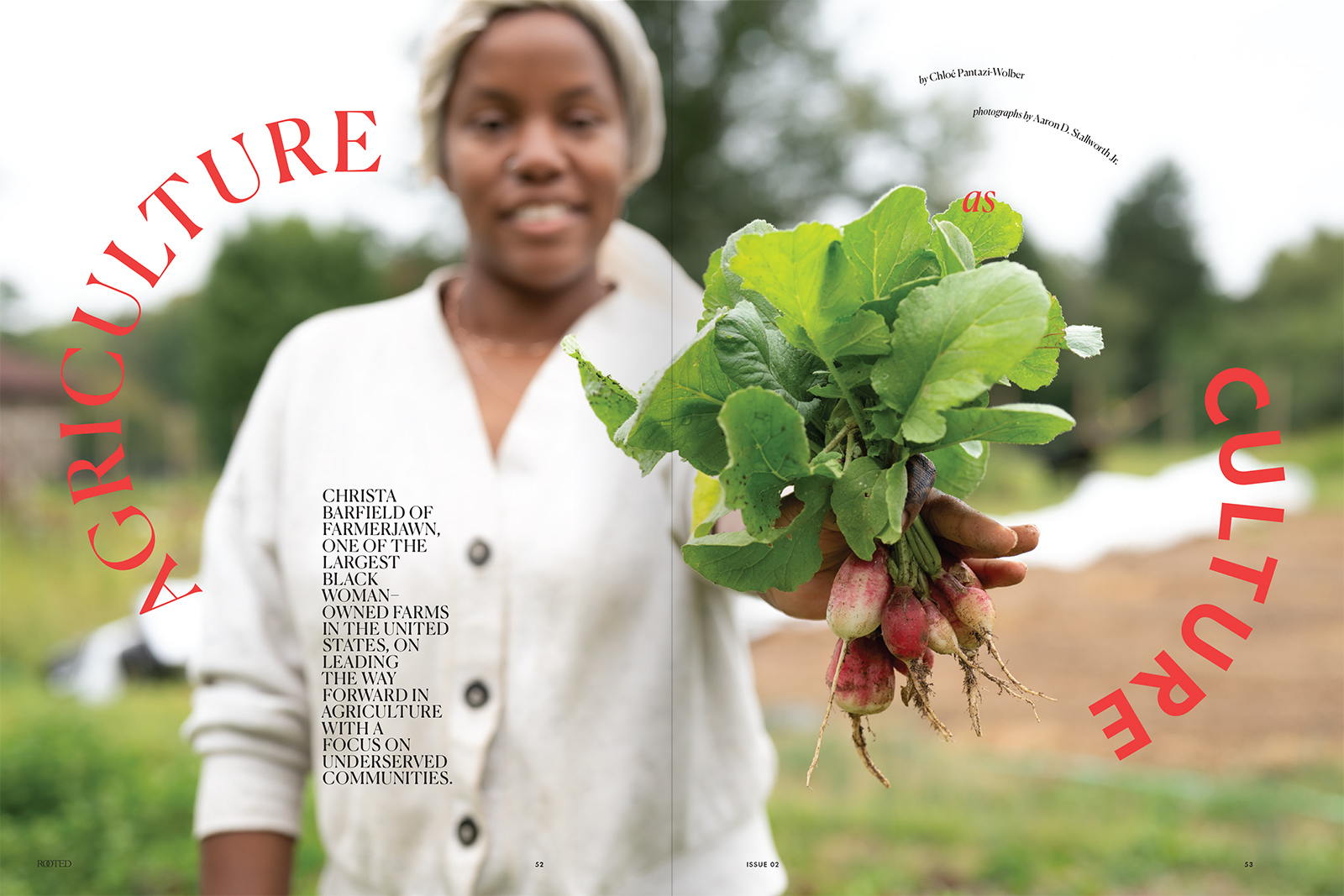
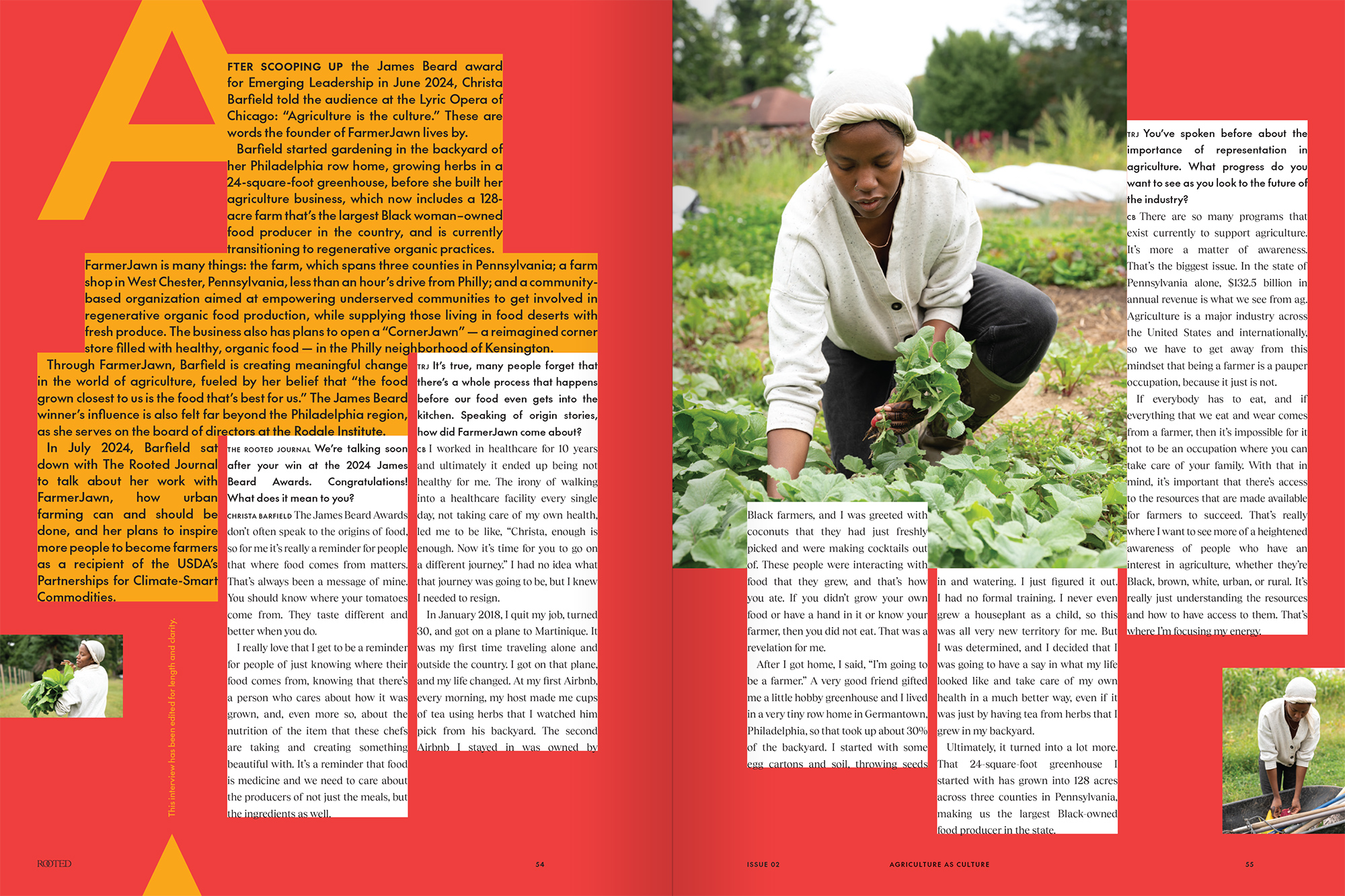
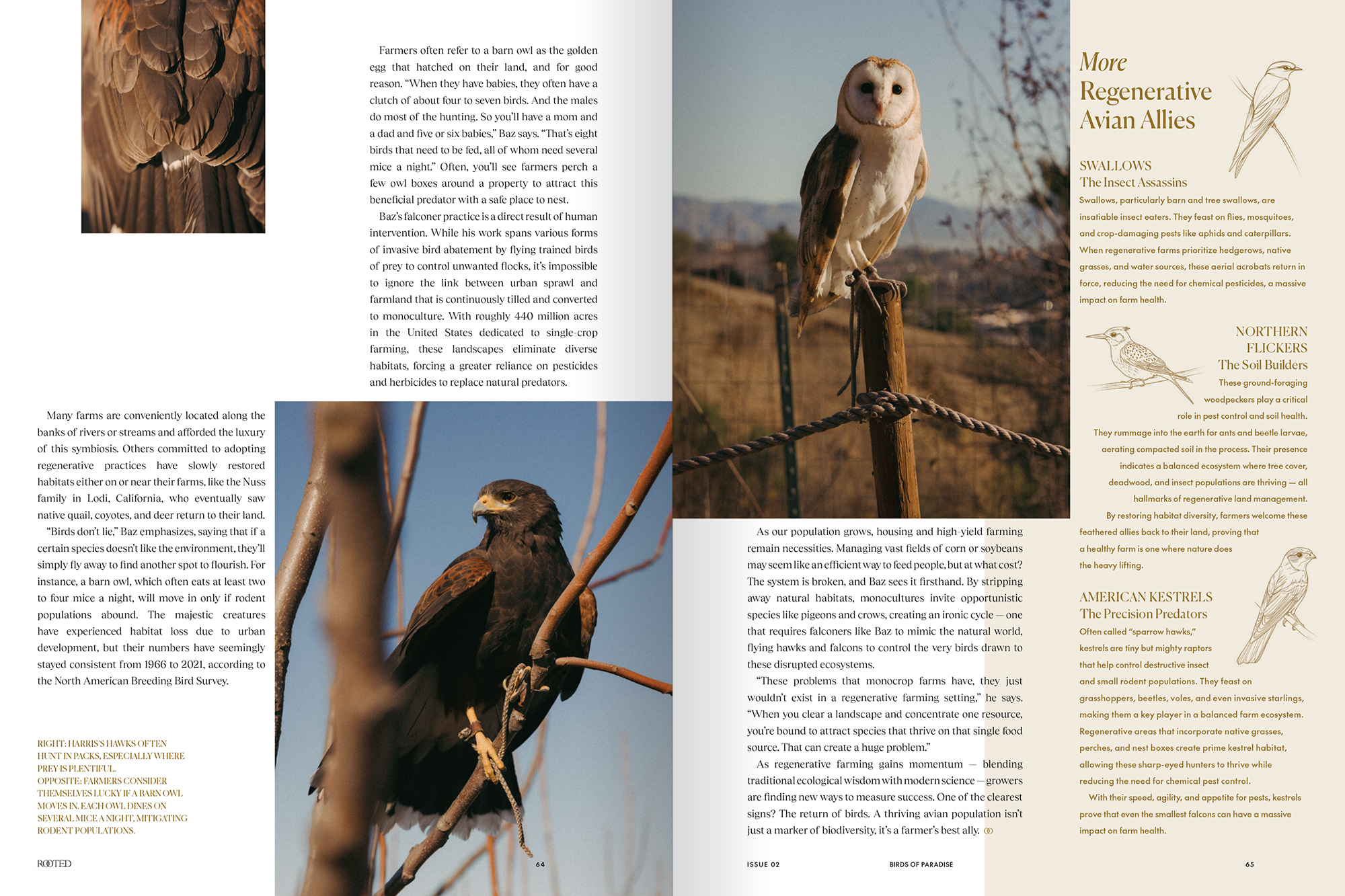
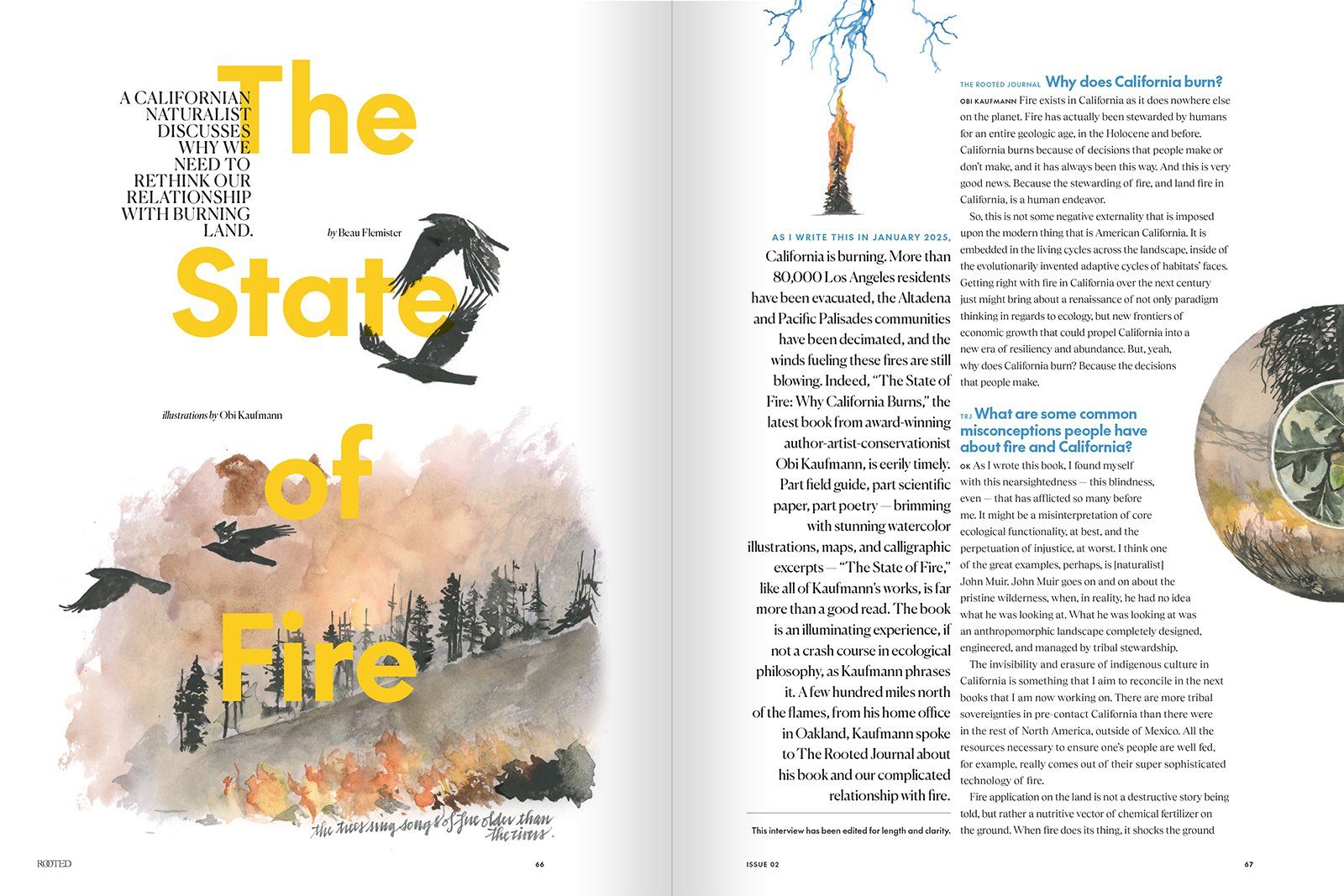
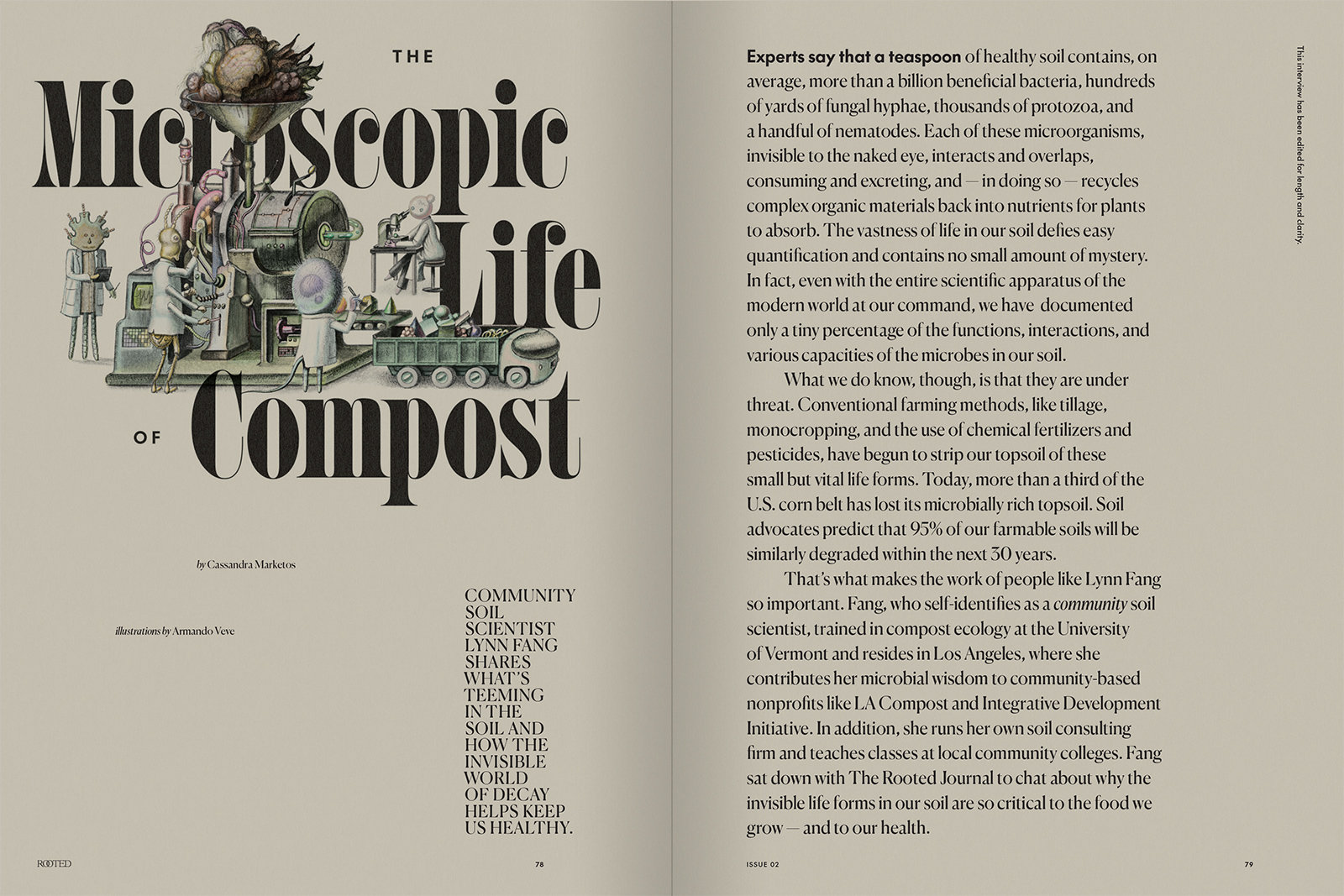
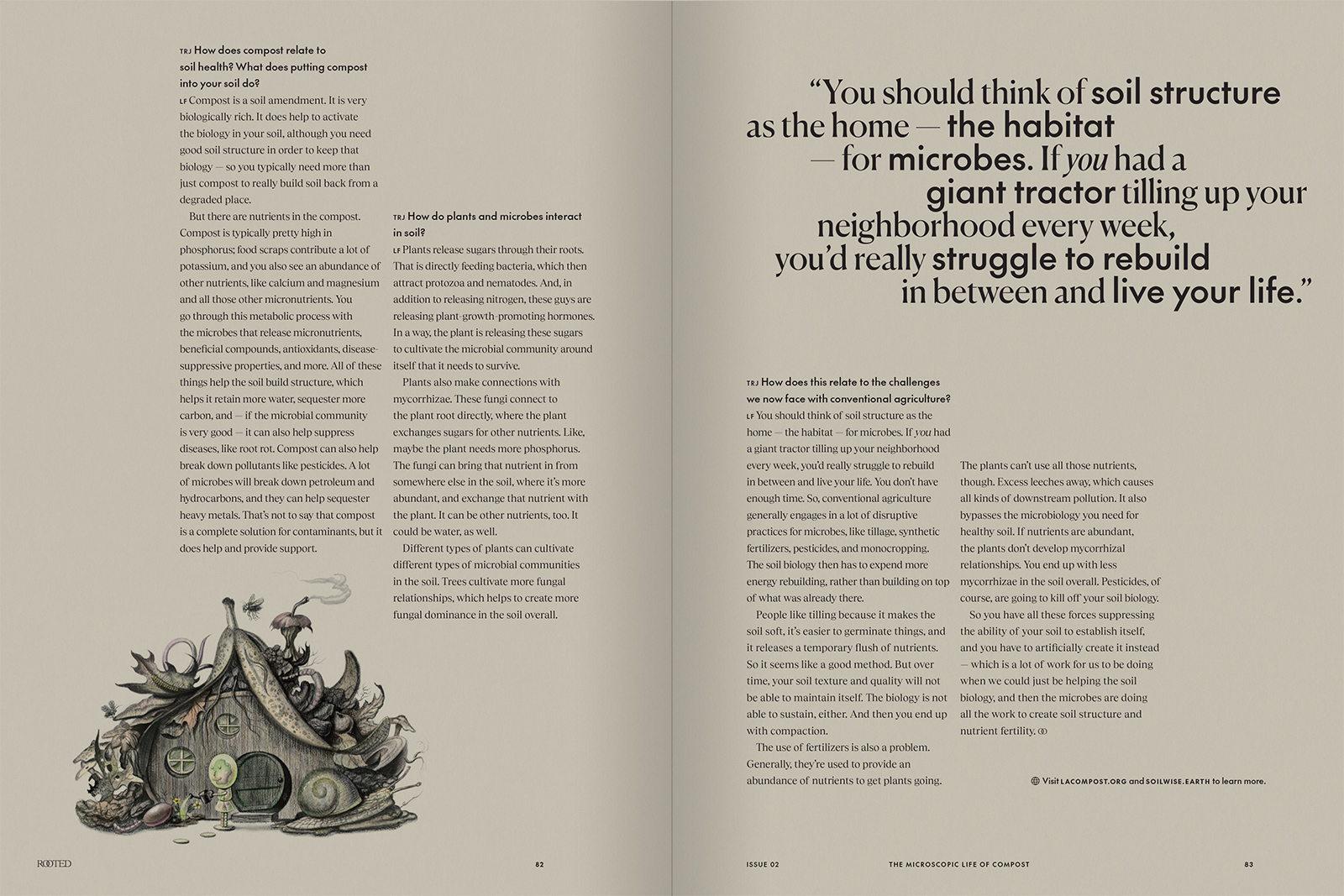
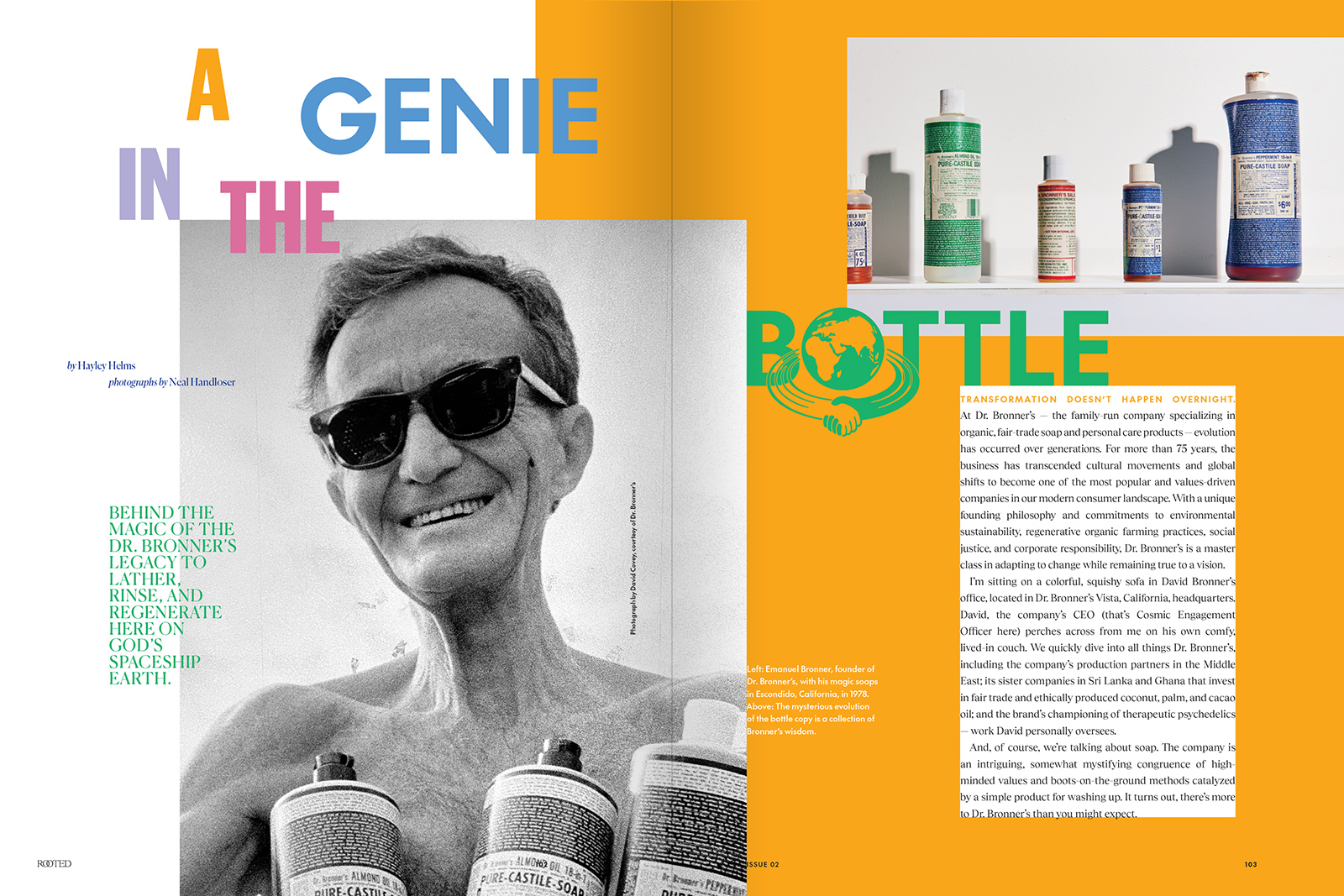
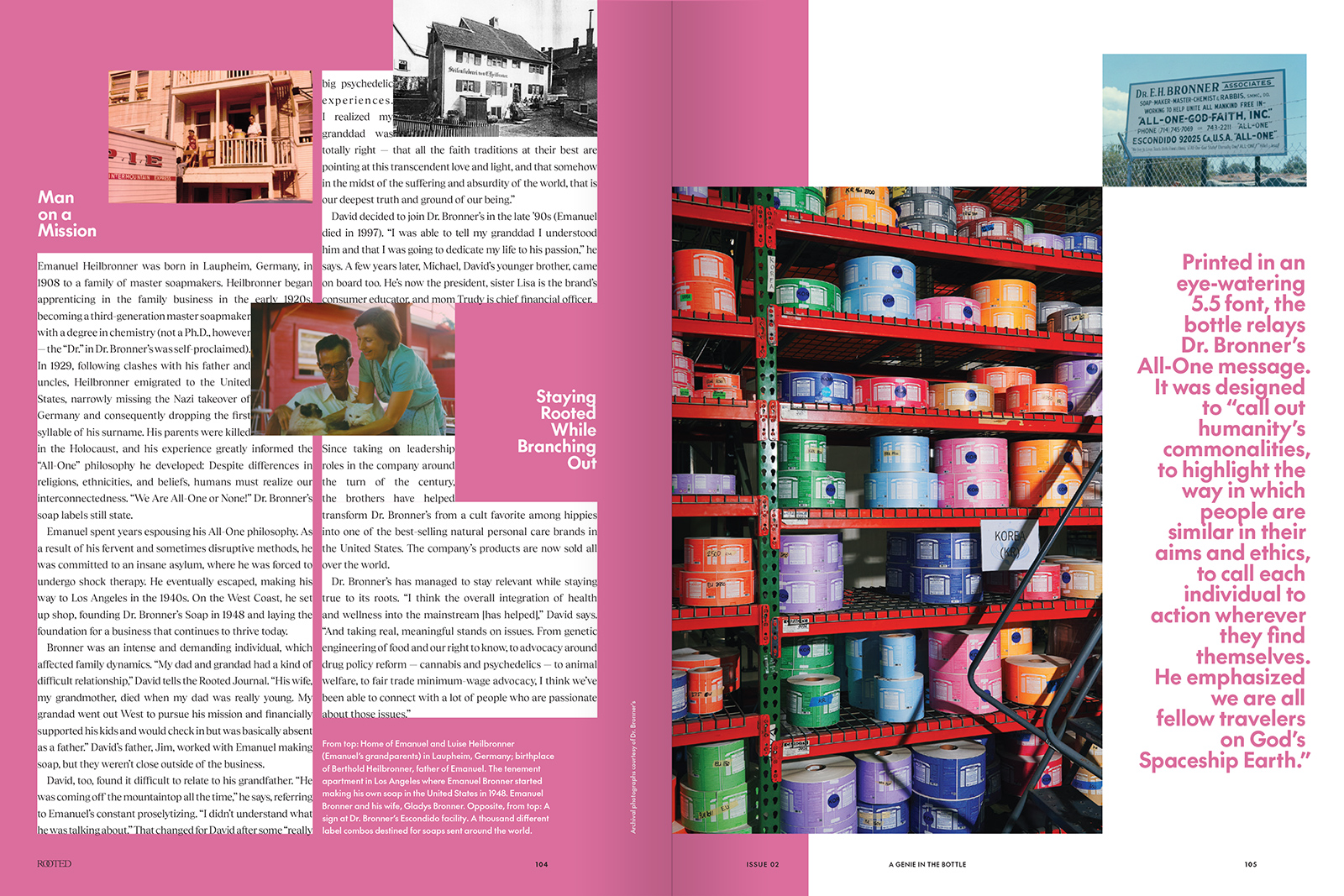
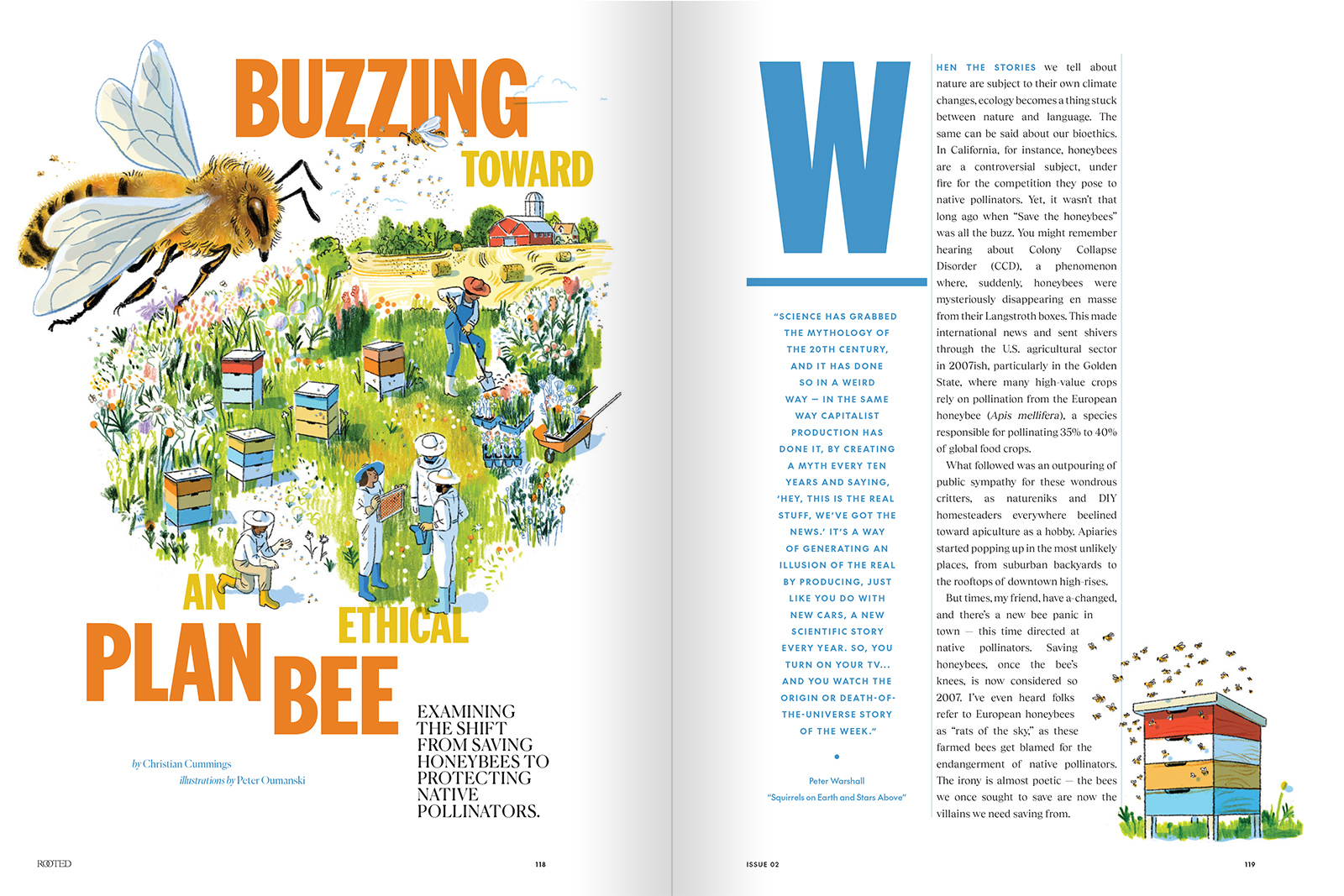
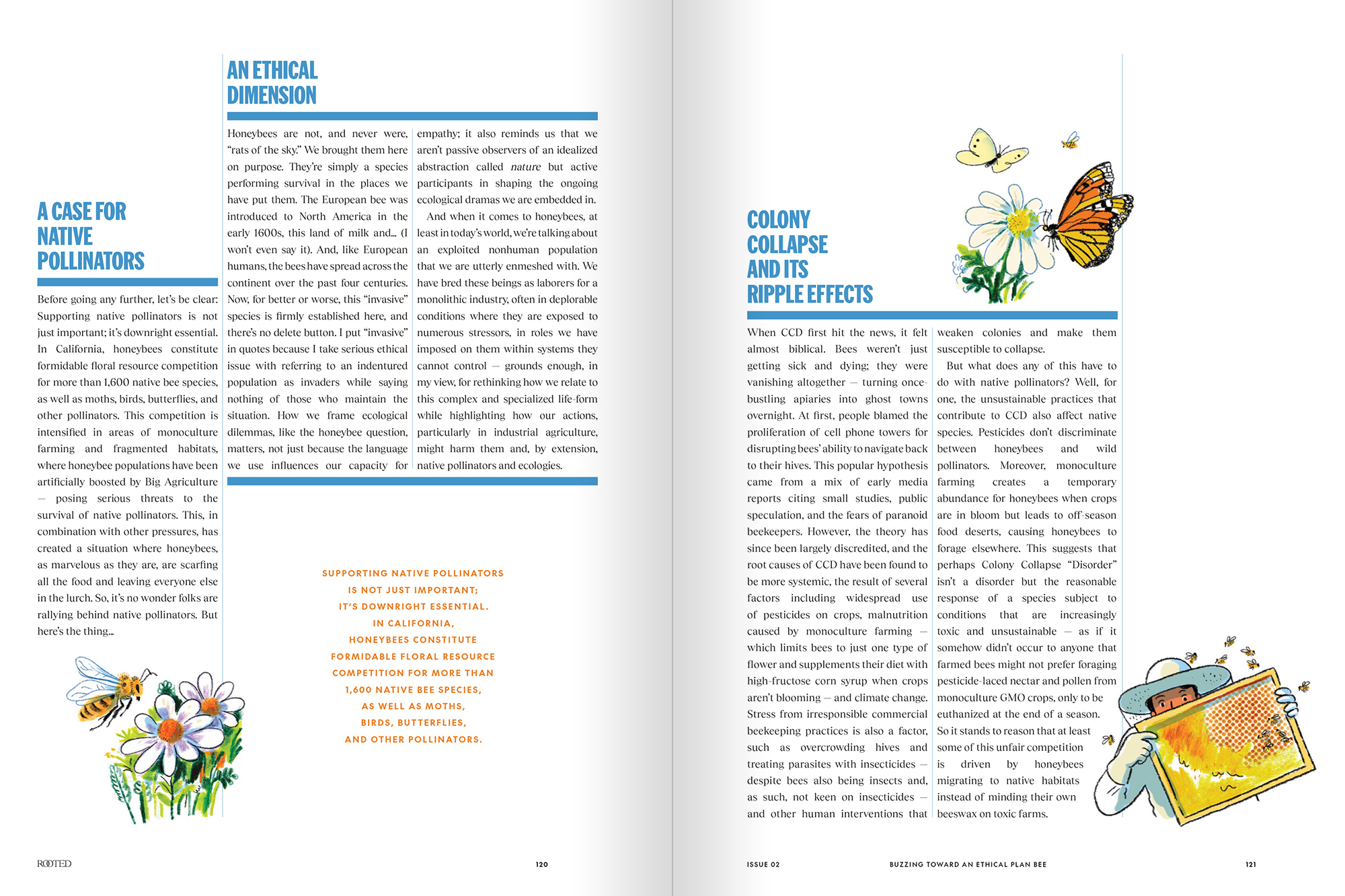
We knew illustration would play a very important component in the structure of the magazine, and the art direction and design of the feature well began to personalize itself around it, with headlines and typography sharing space or even fighting with it in order to convey the nature of the story.

Illustrations by Keith Negley, Raymond Biesinger, and Nick Iluzada

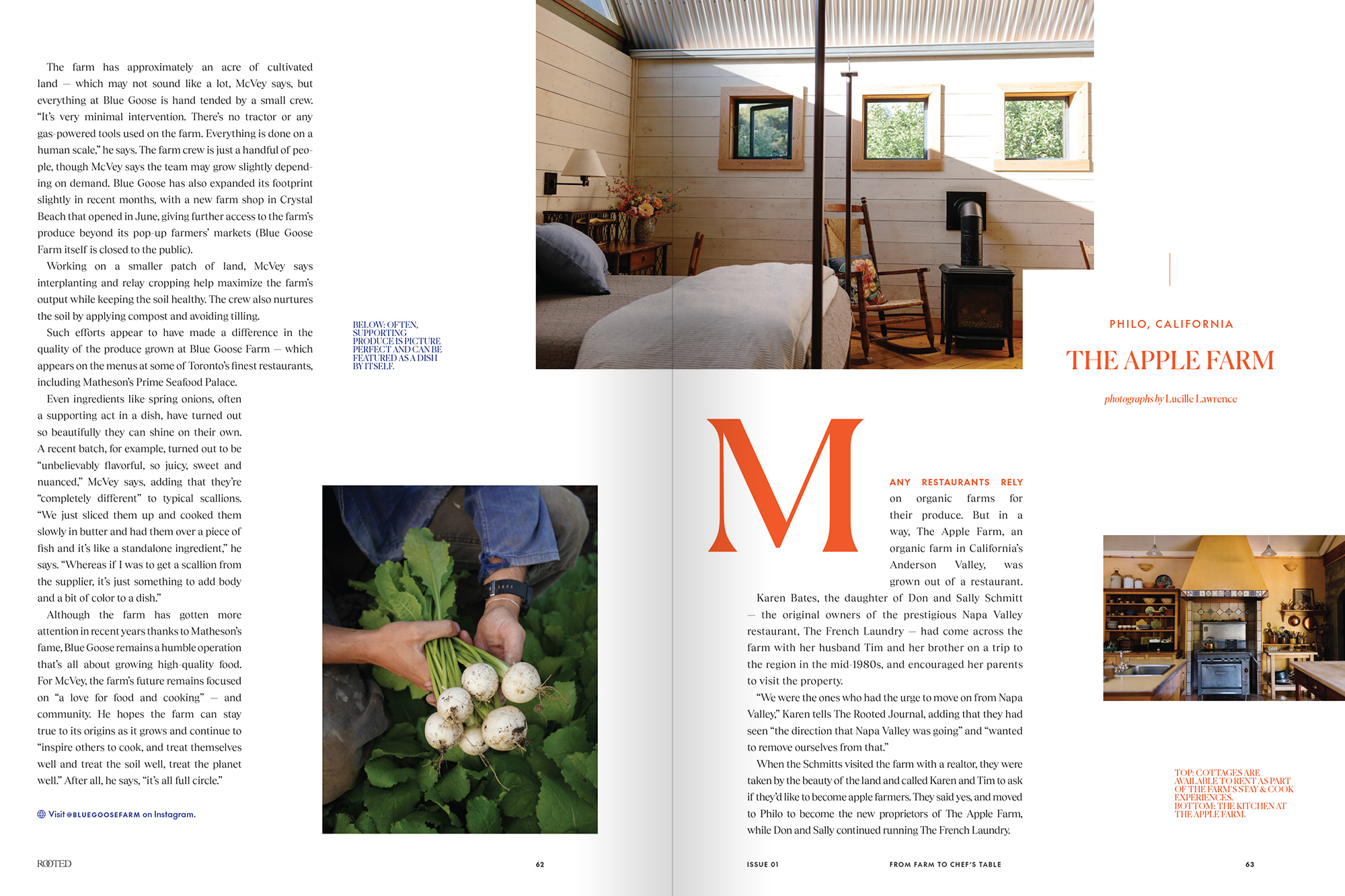
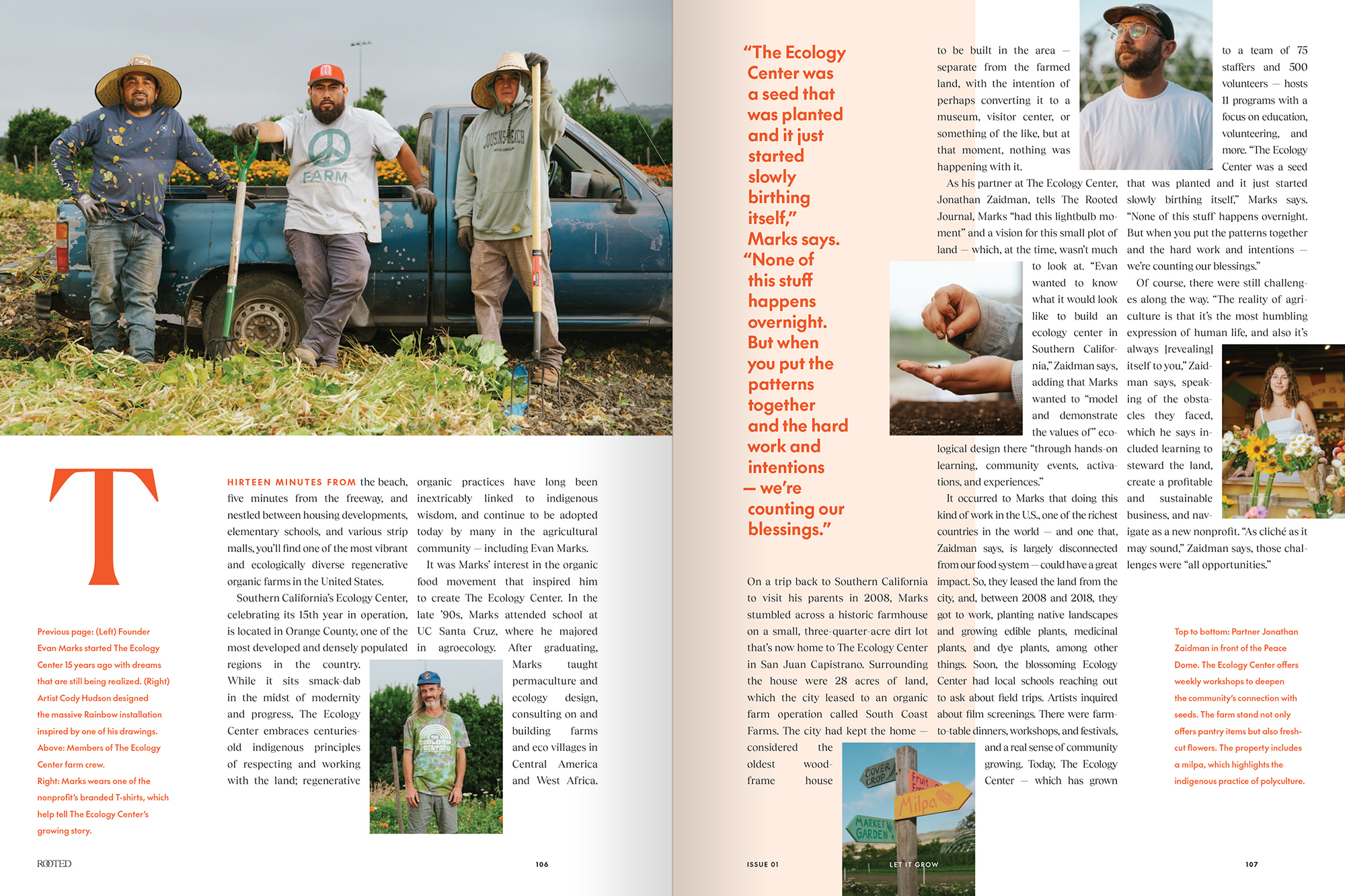
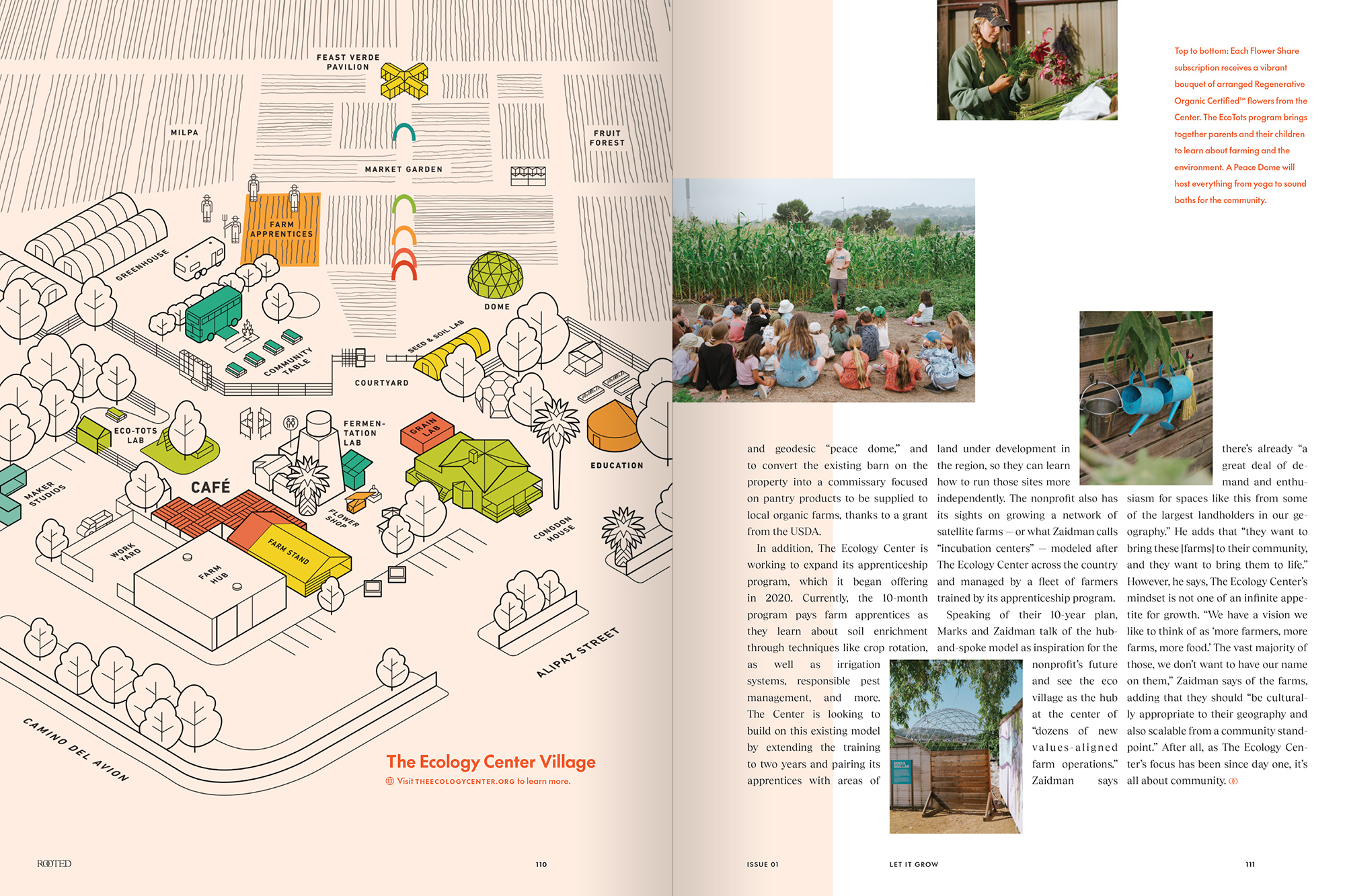
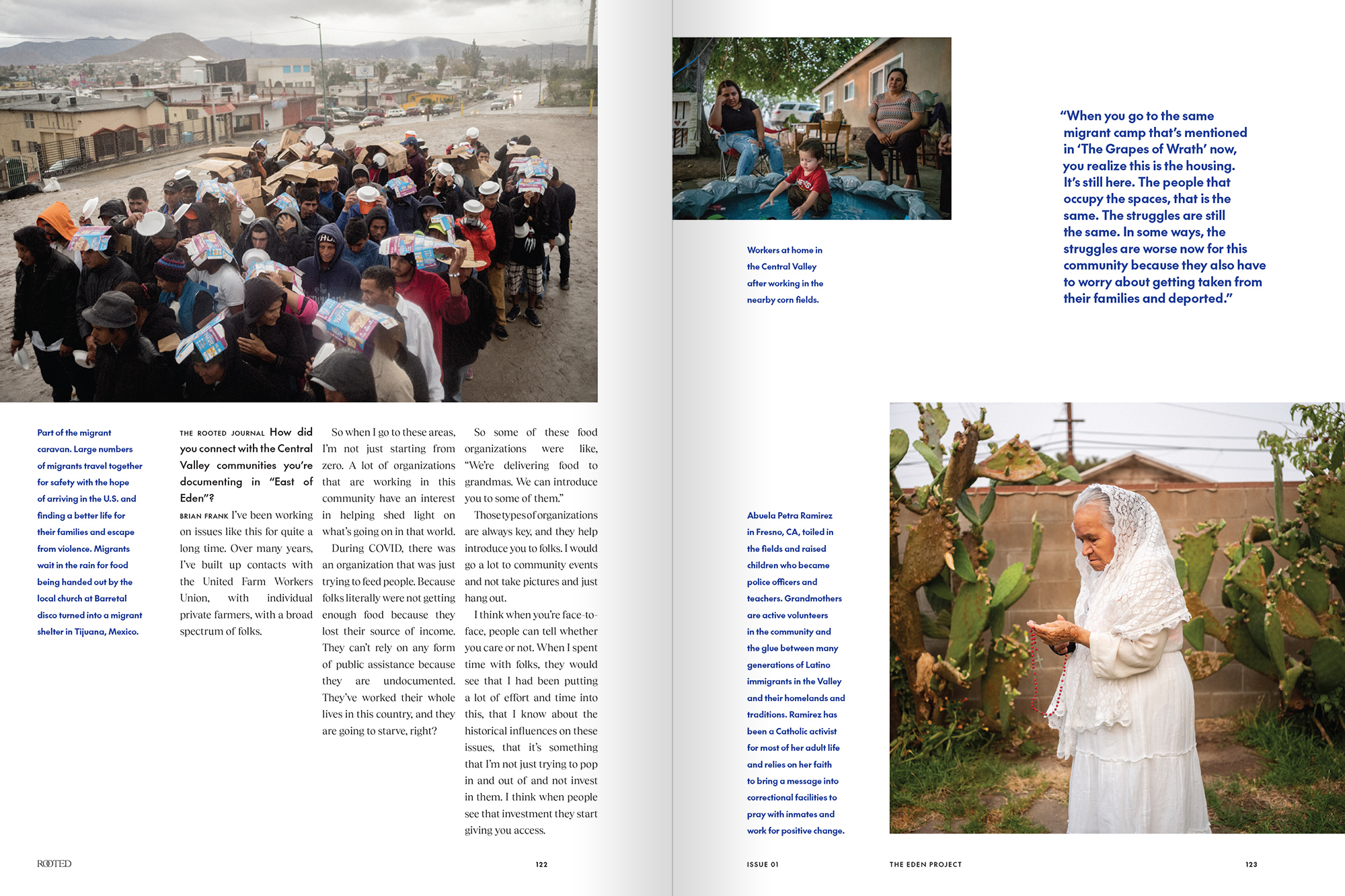
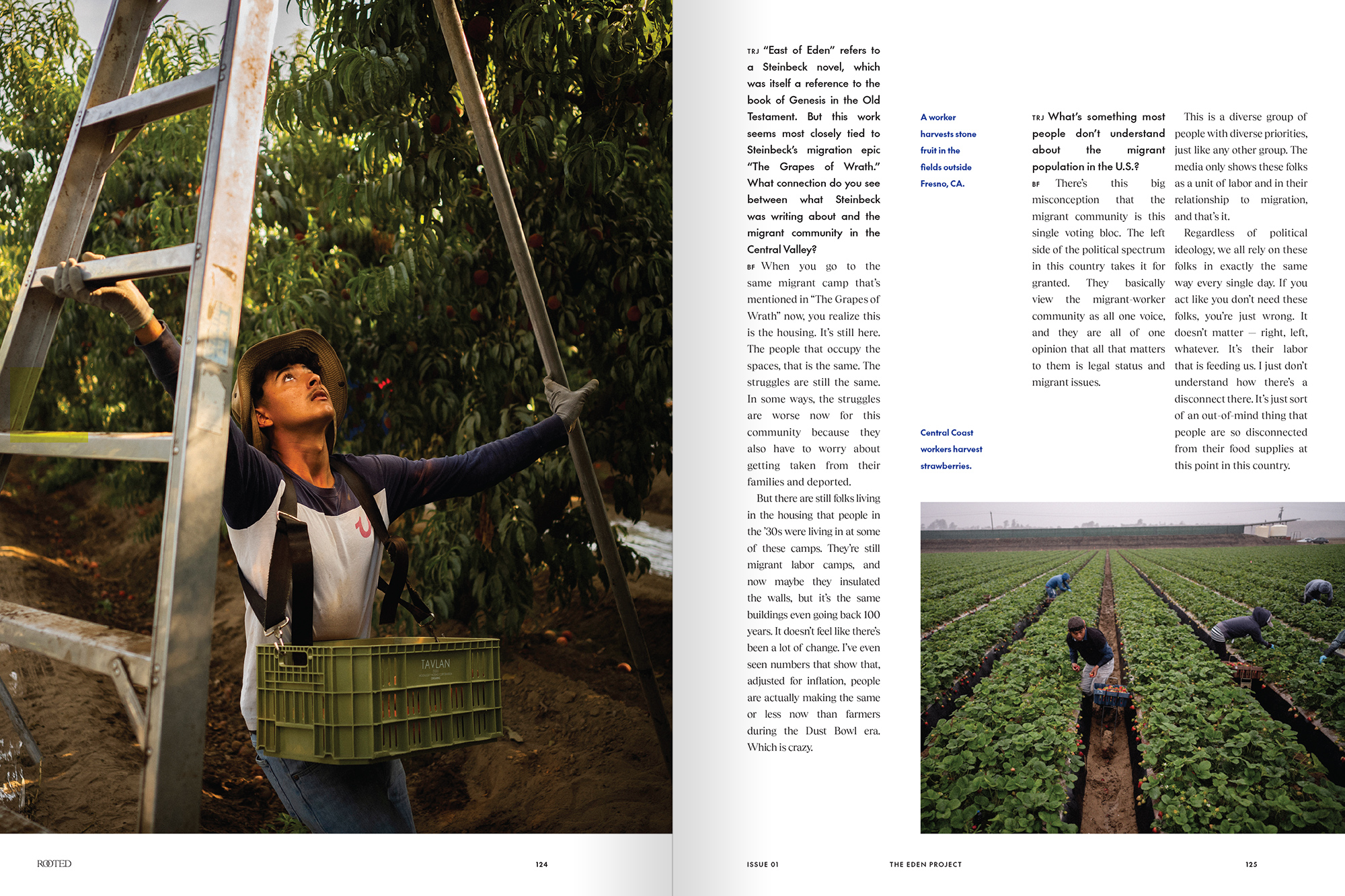
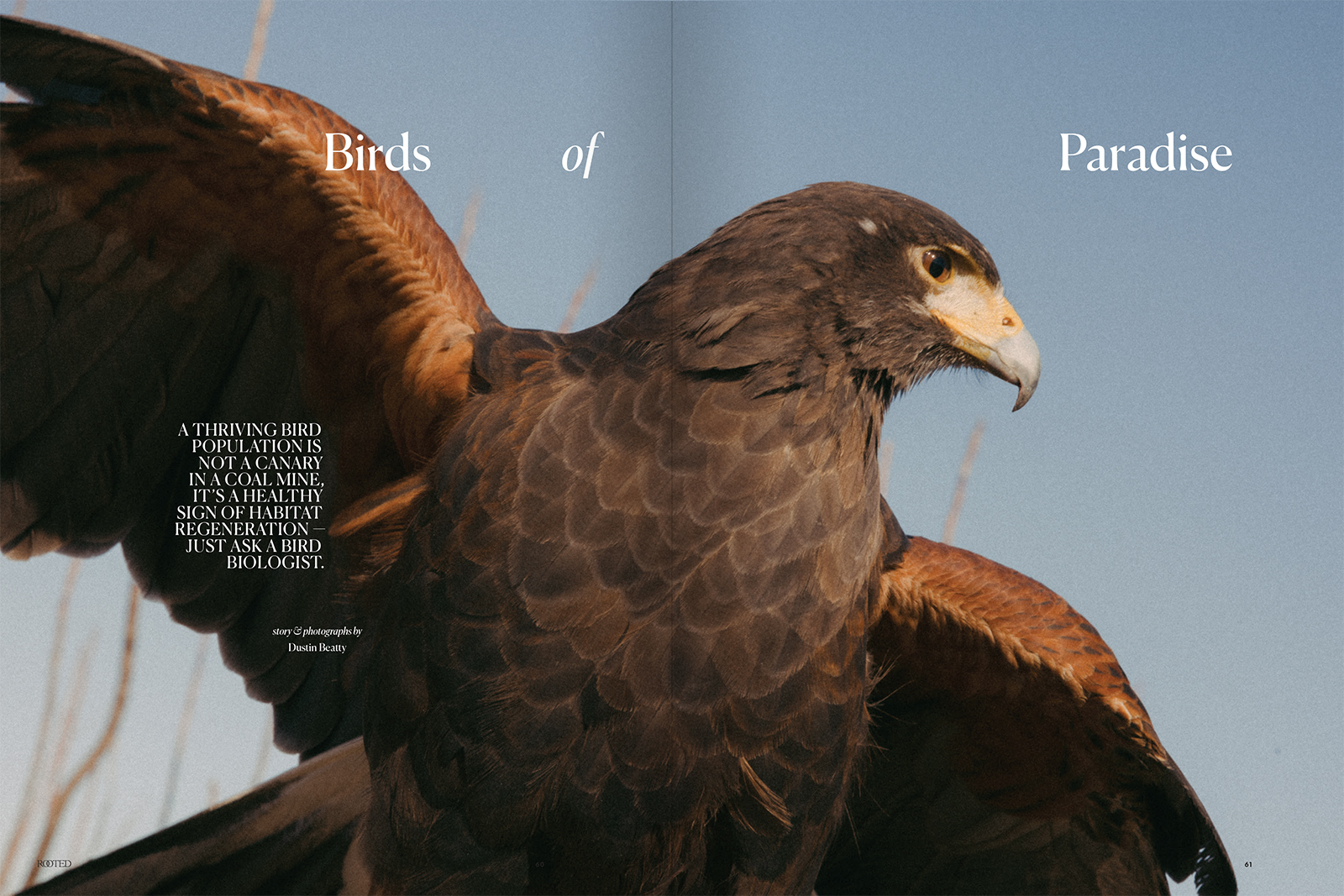
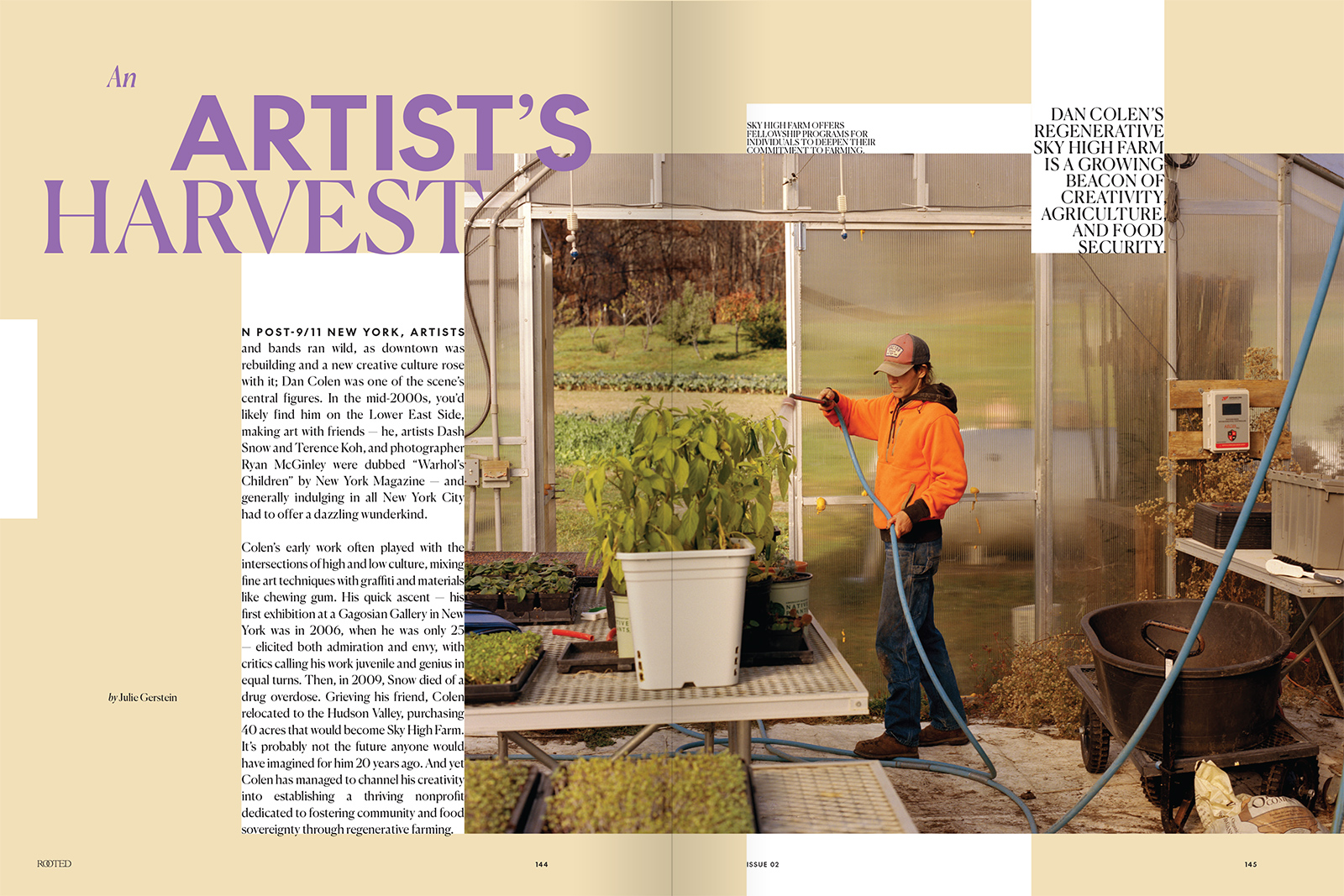
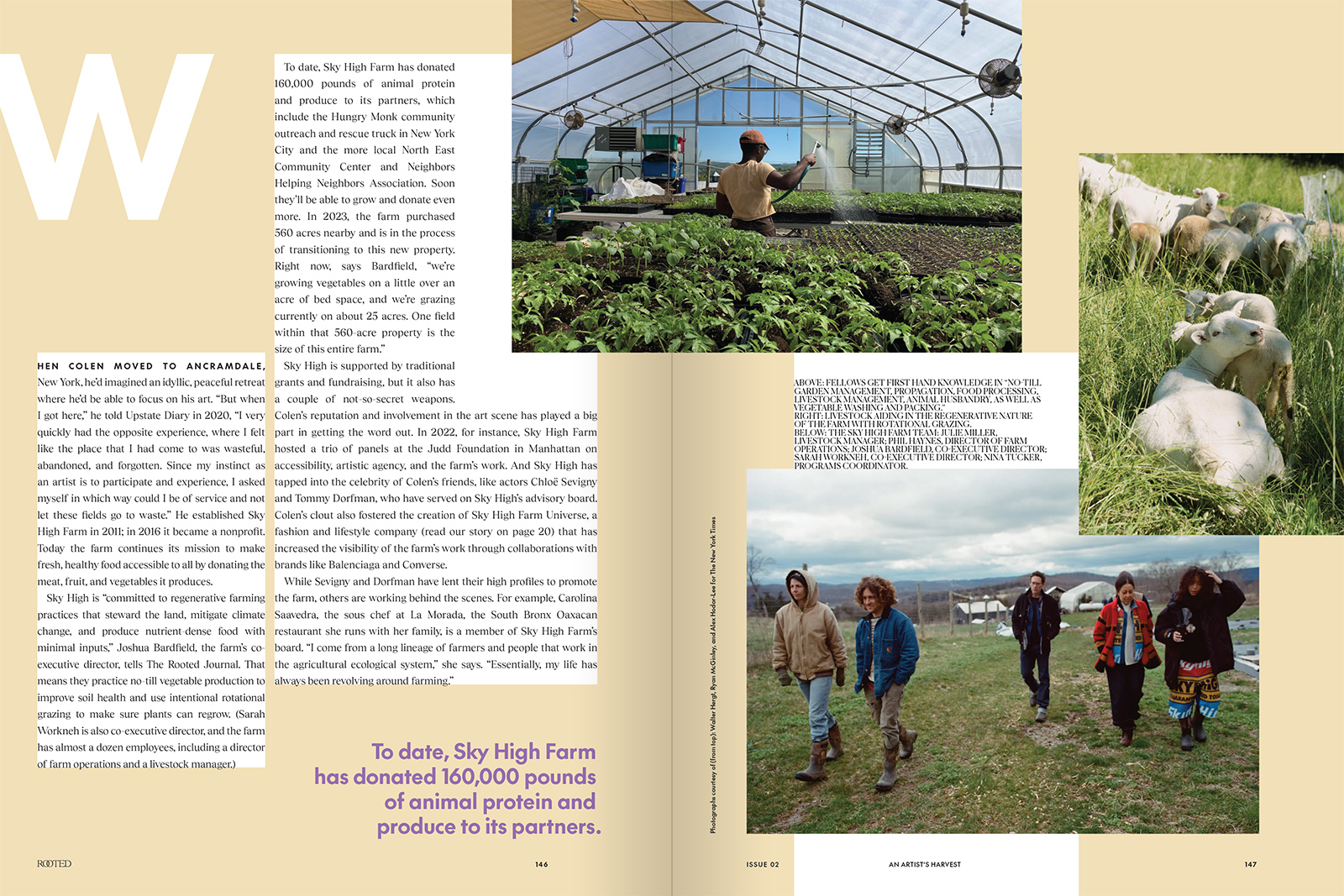
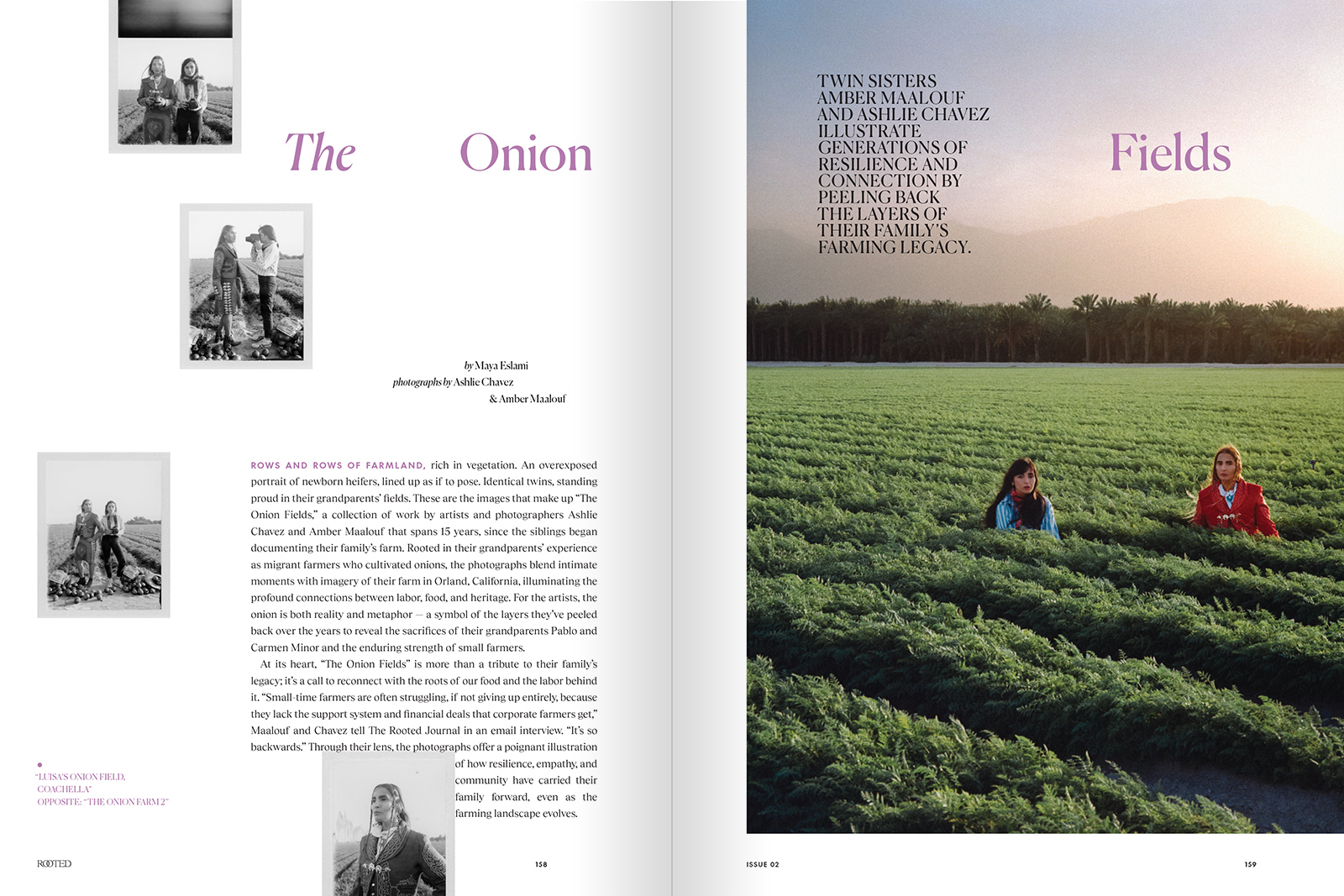
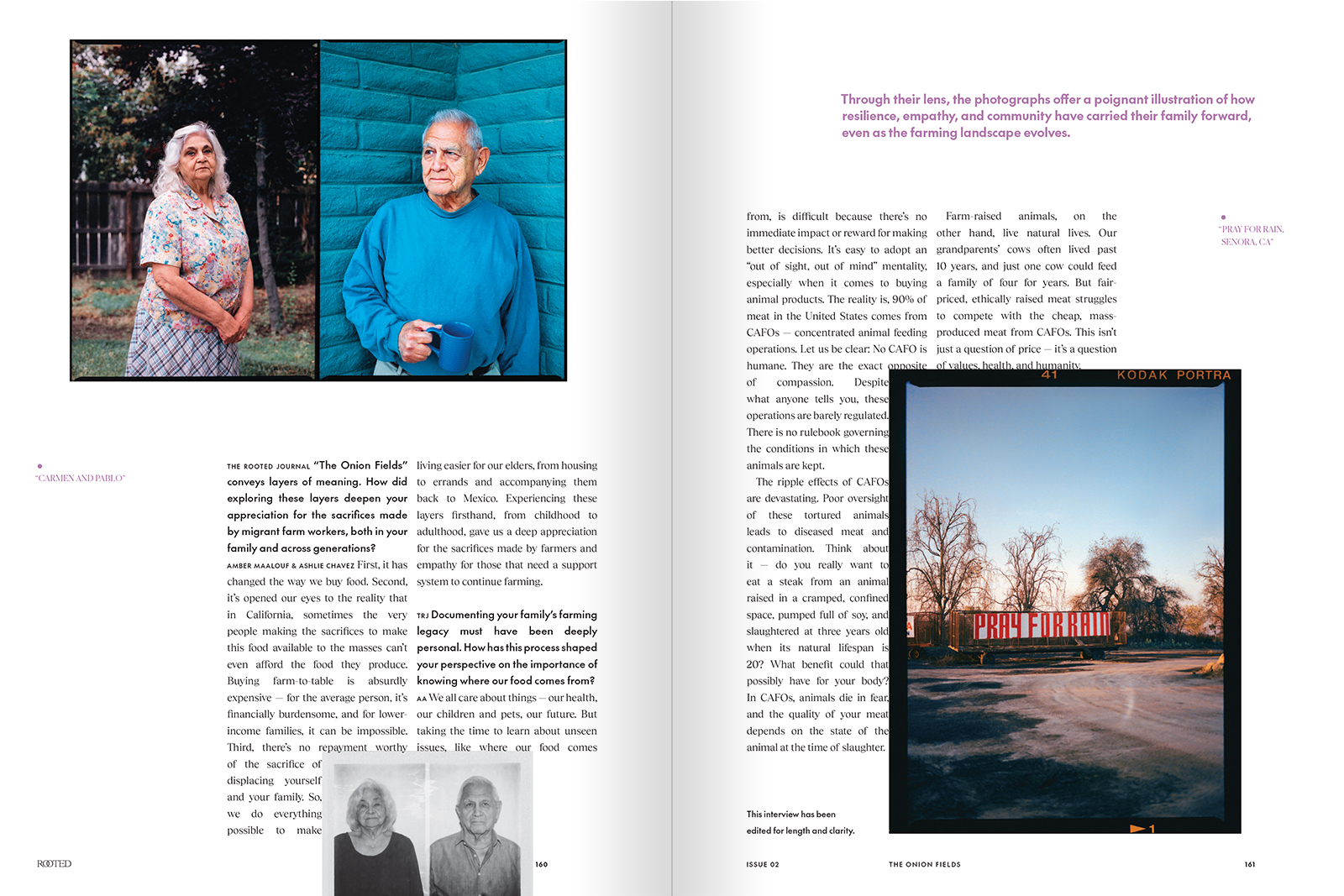
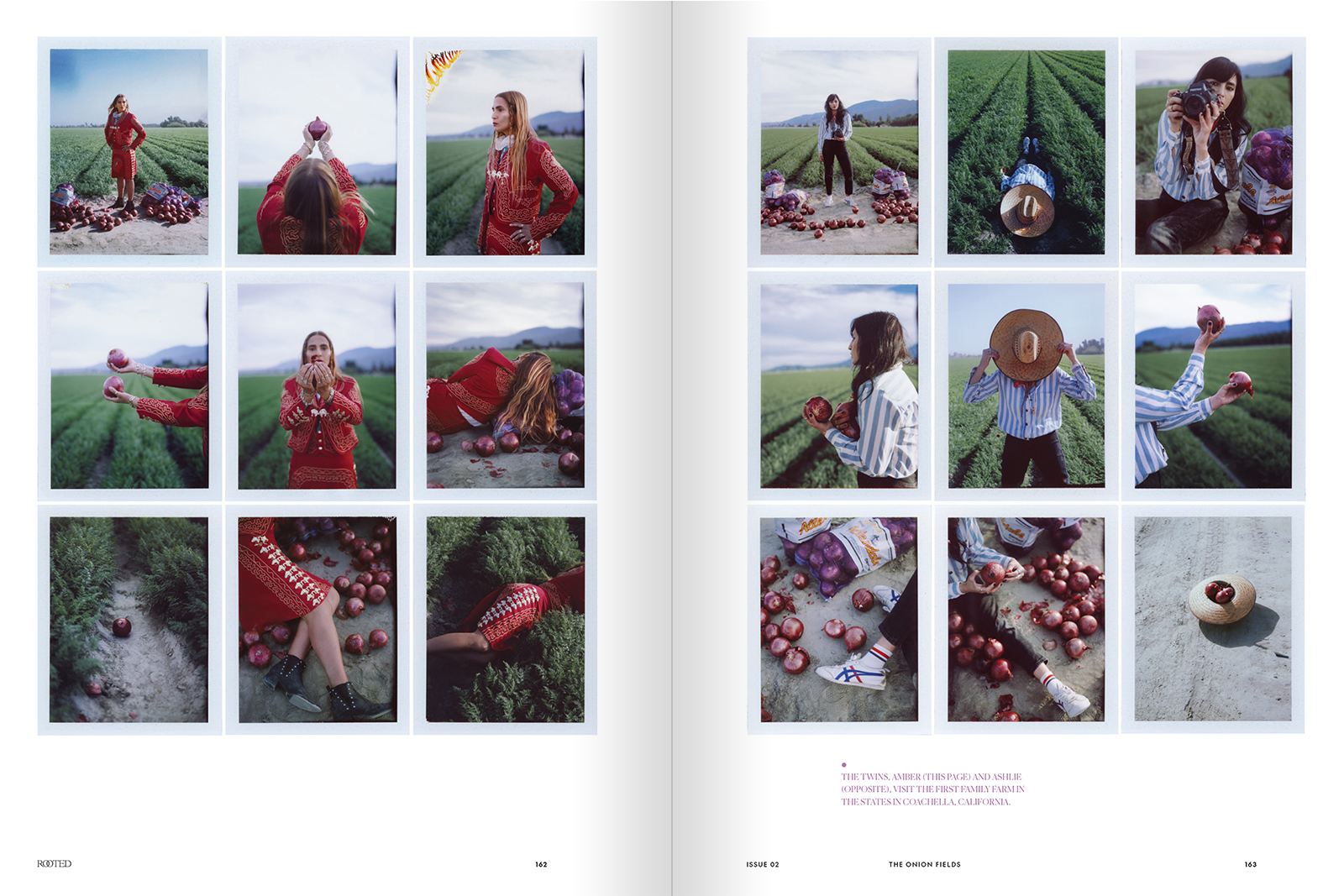
Equal to this was the photography, as we intentionally set a large 9″ x 12″ format in order to allow the proper space for it, incorporating both high quality commissioned work and archival items from the subjects themselves. It should be obvious how much we love grids, and in this case it is rigid yet malleable, with room to breathe or collapse and press against itself, always aligned with what the story is striving to tell. We set up a type system consisting of The Future from Klim Type Foundry and Canela from Commercial Type, rounded out by Tobias from Displaay for body copy.

With Issue 2 we bumped up the page count significantly, and commissioned artist Bill Rebholz for a beautiful gatefold cover that celebrates the farmers and food workers in the issue — those who feed their communities, advocate for food security, and honor agriculture as culture.

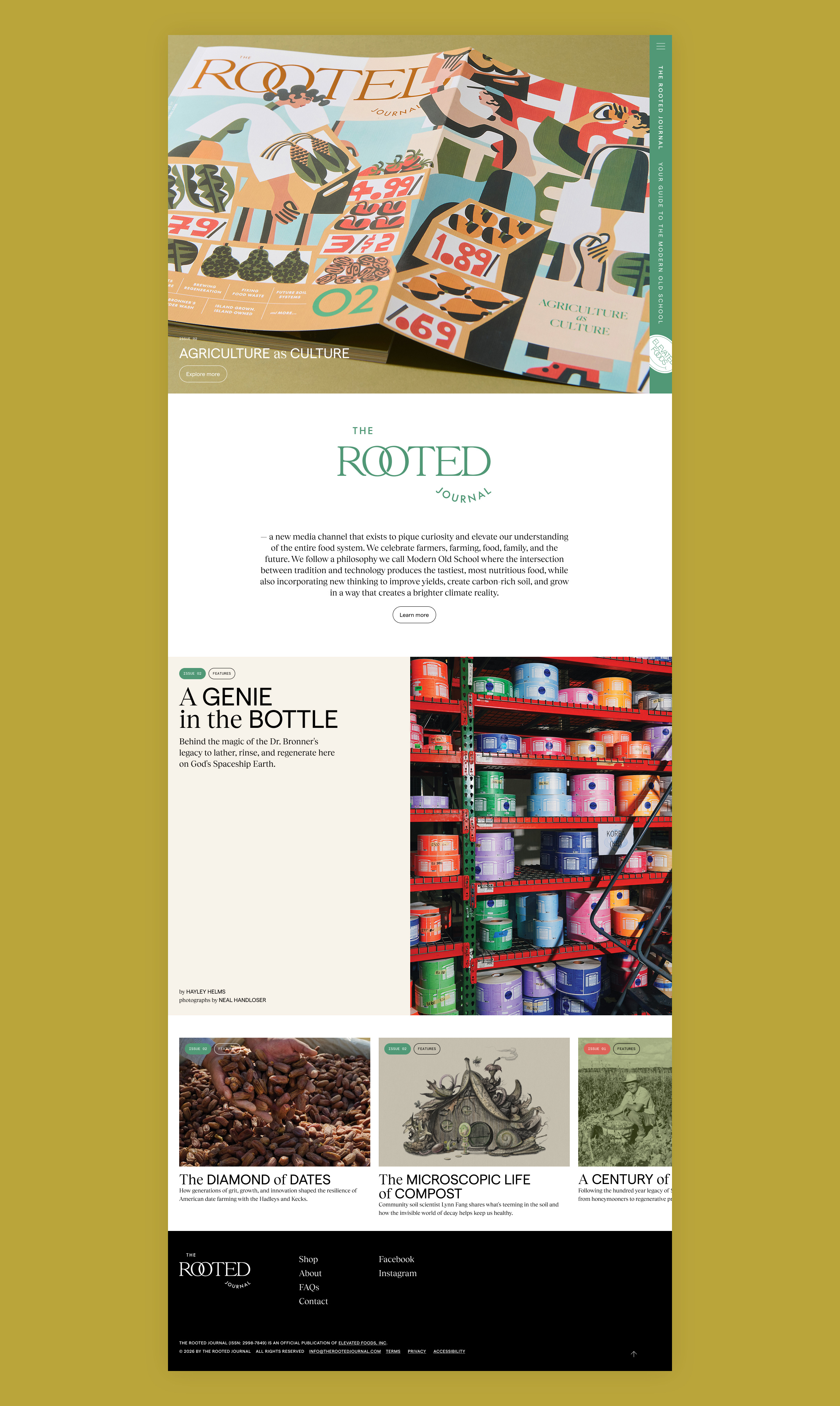
We naturally teamed up with Camp Quiet to bring the stories to the web, utilizing a variation of the typography system found in print with Sprout, as well as a tagging system of issue number and categories for easy exploring (along with an adapted magazine “spine” staying present throughout the experience, highlighting the color of the current issue).